Nest
Name
Nest
Type
Multidisciplinary Athletic Campus
Location
Little Rock, Arkansas
Year
Fall 2024
Project Intent
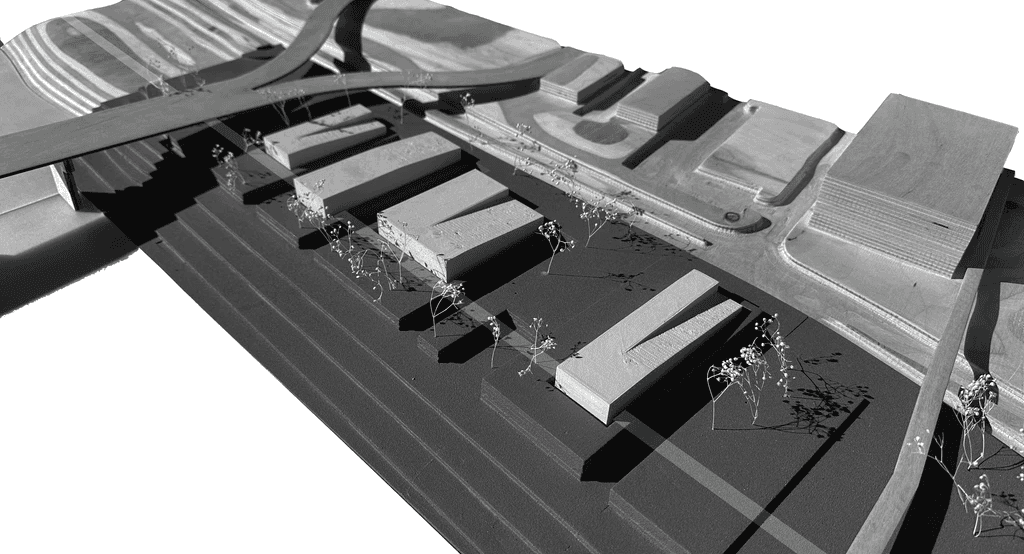
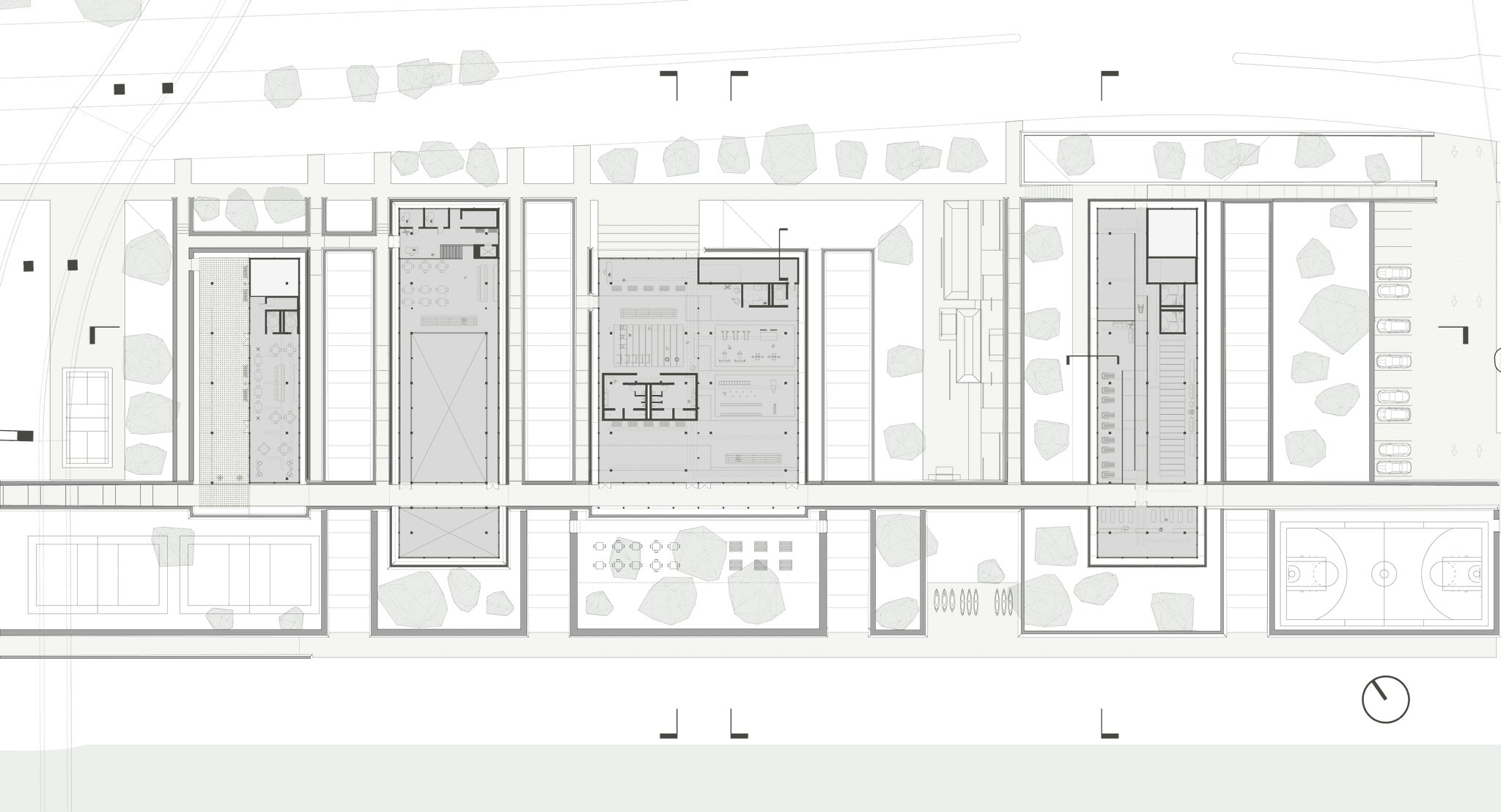
NEST is a 100,000 square foot multi-building athletic campus located along the Arkansas River in Little Rock, AR. The project is conceived as a durable spatial framework for health, movement, and long-term resilience. Rather than concentrating program within a single structure, athletic functions are distributed across a series of buildings that are fixed in their placement but open in their use. This approach allows the campus to maintain a clear architectural order while remaining adaptable to future needs.
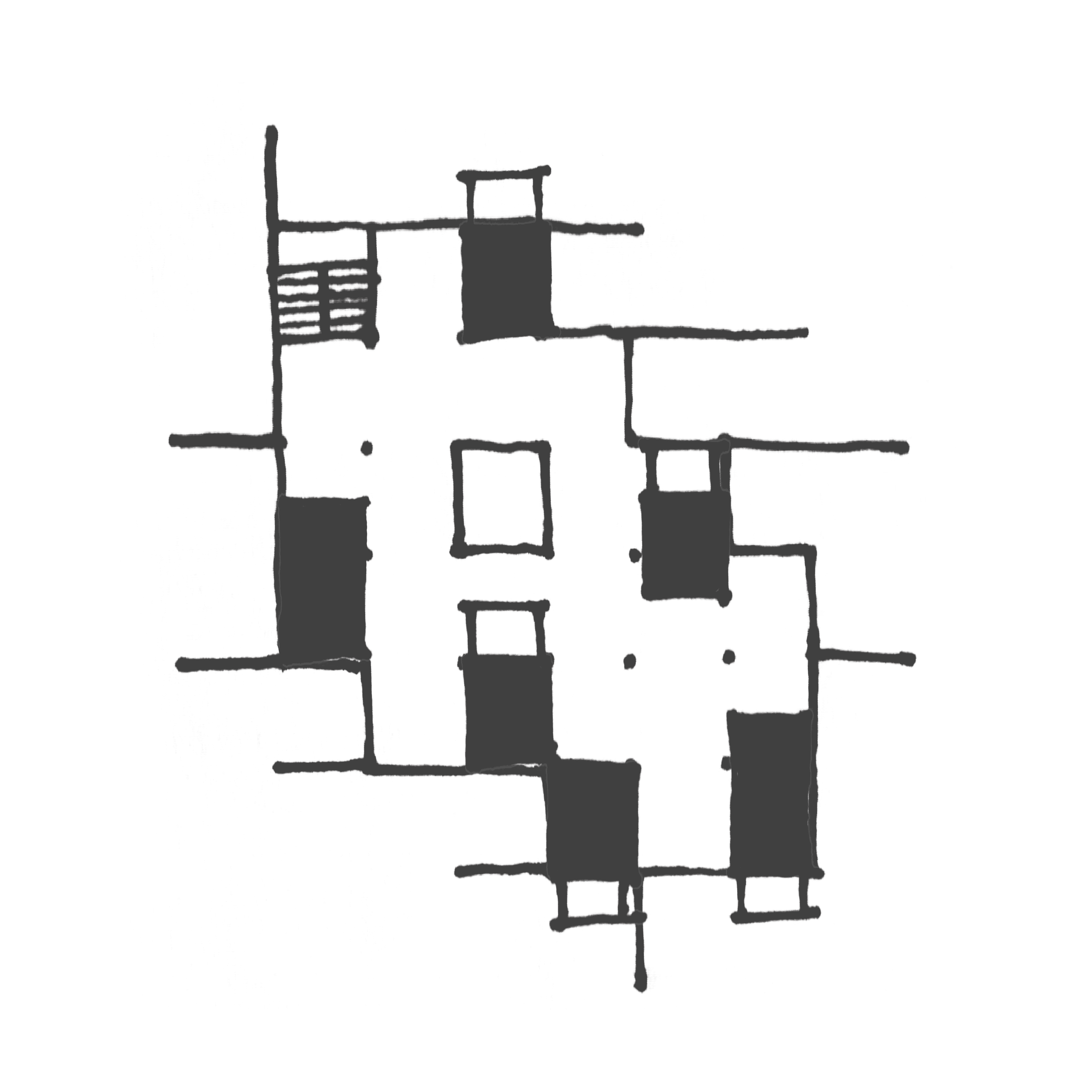
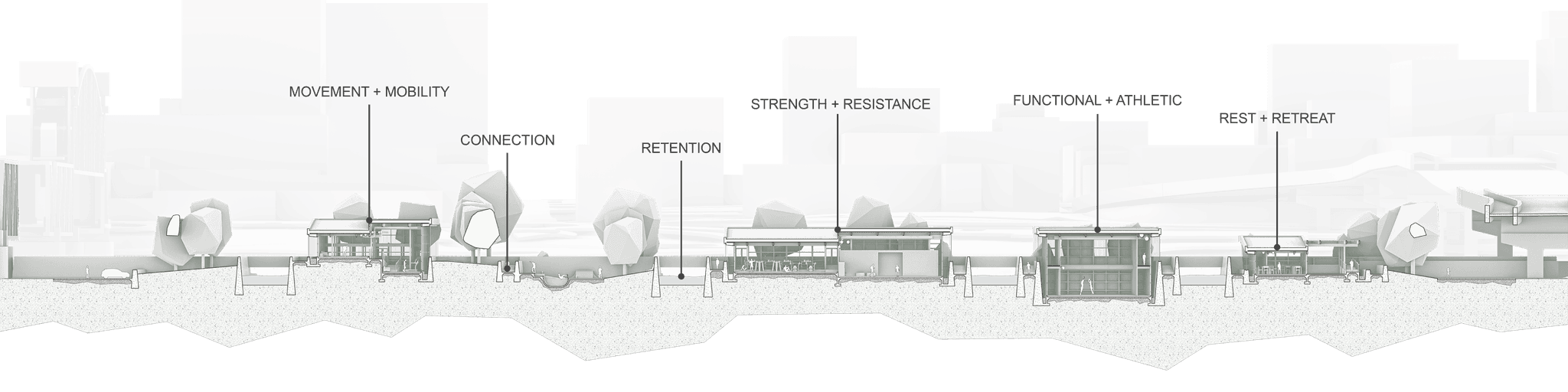
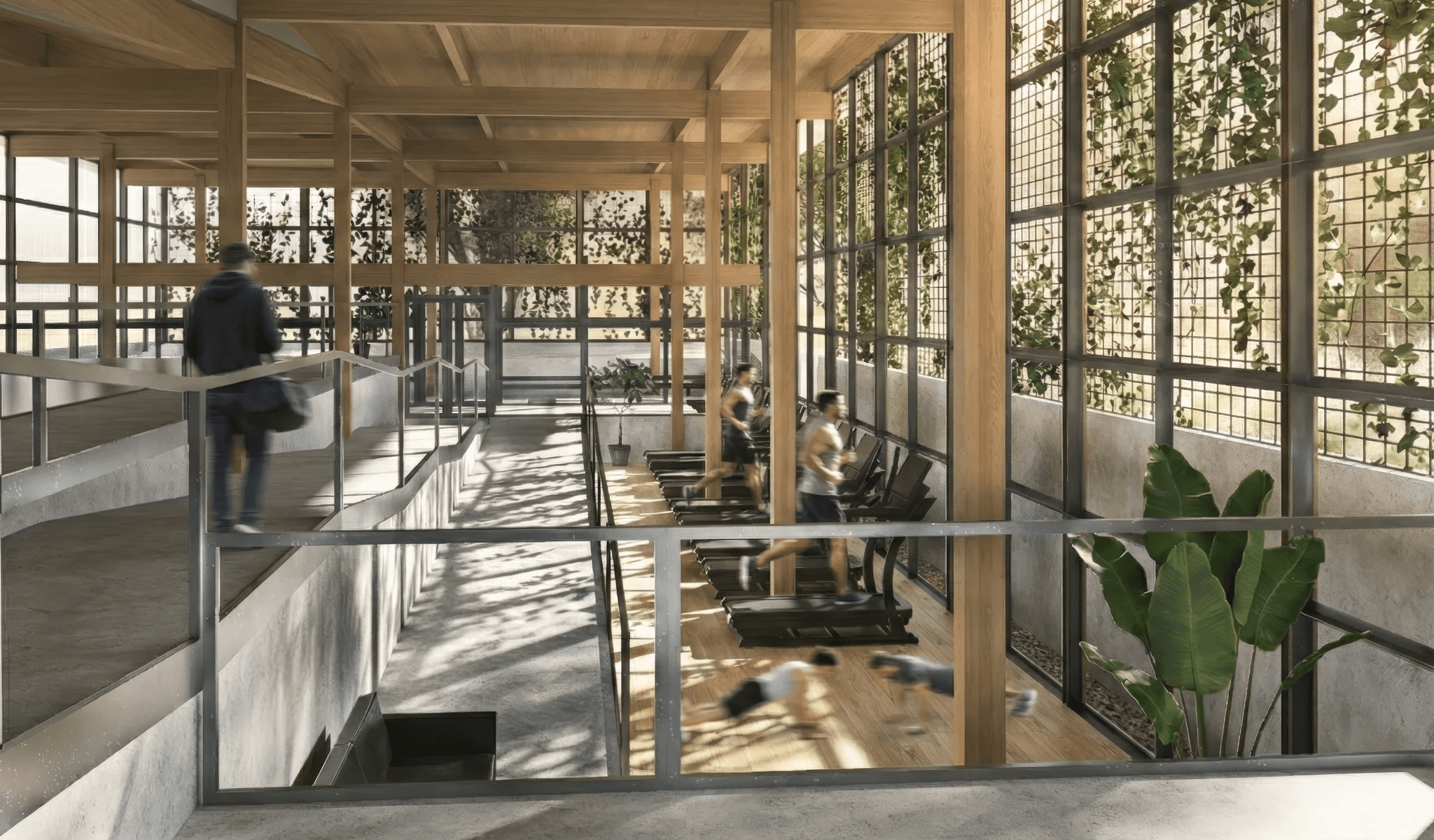
The campus is organized around a defined gradient of activity that moves from movement + mobility, strength + resistance, functional + athletic, and finally rest + retreat. This gradient establishes the spatial and experiential logic of the site, while flexibility occurs within each building’s interior organization that simply caters to these occupations. Wellness is framed not as a singular destination, but as a progression shaped by movement through space.
A
D
1
Concept
The central concept of NEST solidarity; buildings nested within the floodplain landscape, programs nested within adaptable typologies, and athletic intensity nested within cycles of exertion and recovery. The facilities are fixed in their placement yet open in their interpretation, allowing the site’s environmental systems to play a defining role in shaping experience.
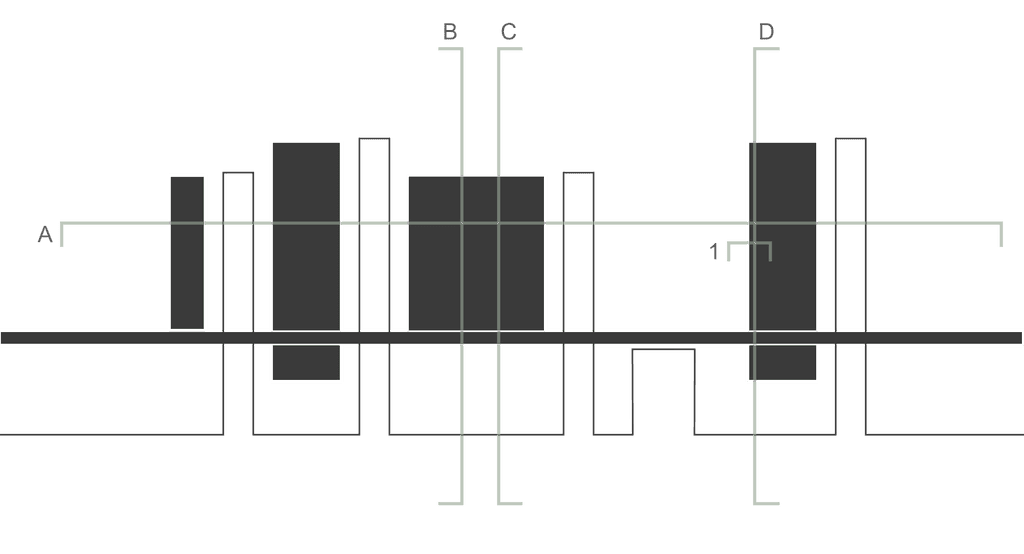
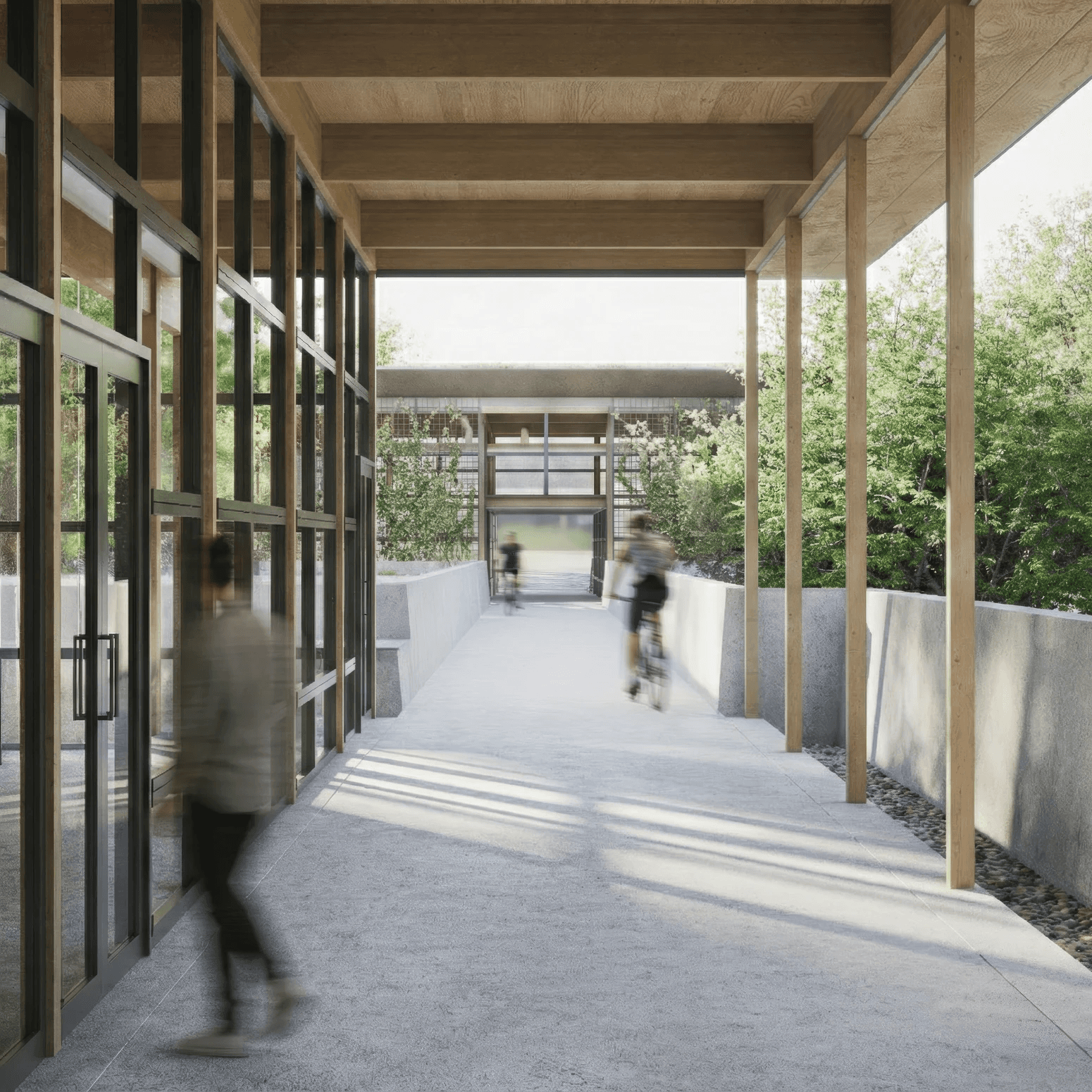
A linear axial path unites the campus, functioning as both circulation and narrative. Along this path, the buildings align with programmatic identities, establishing the campus as a sequential journey toward holistic health. Water retention zones separate and define each structure, acting simultaneously as flood mitigation infrastructure and ecological systems that sustain vegetation and microclimates throughout the site.
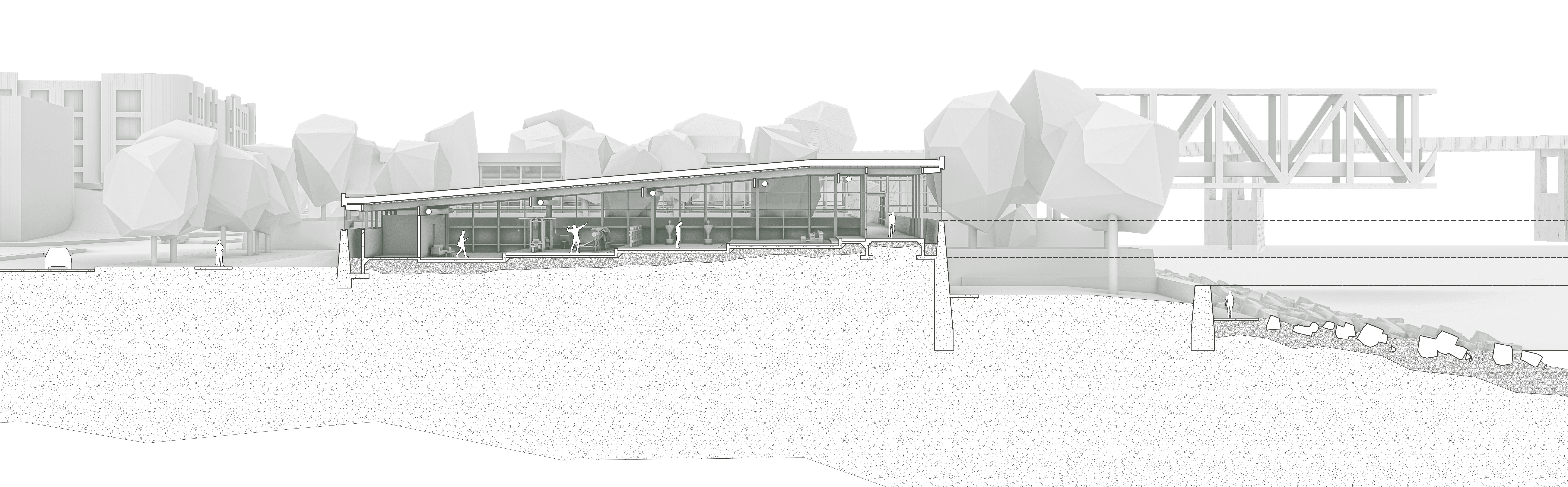
Positioned along the Arkansas River, the project responds directly to floodplain conditions, treating water not as a constraint but as an organizing element that structures form, spacing, and rhythm across the campus.
Materialization & Form
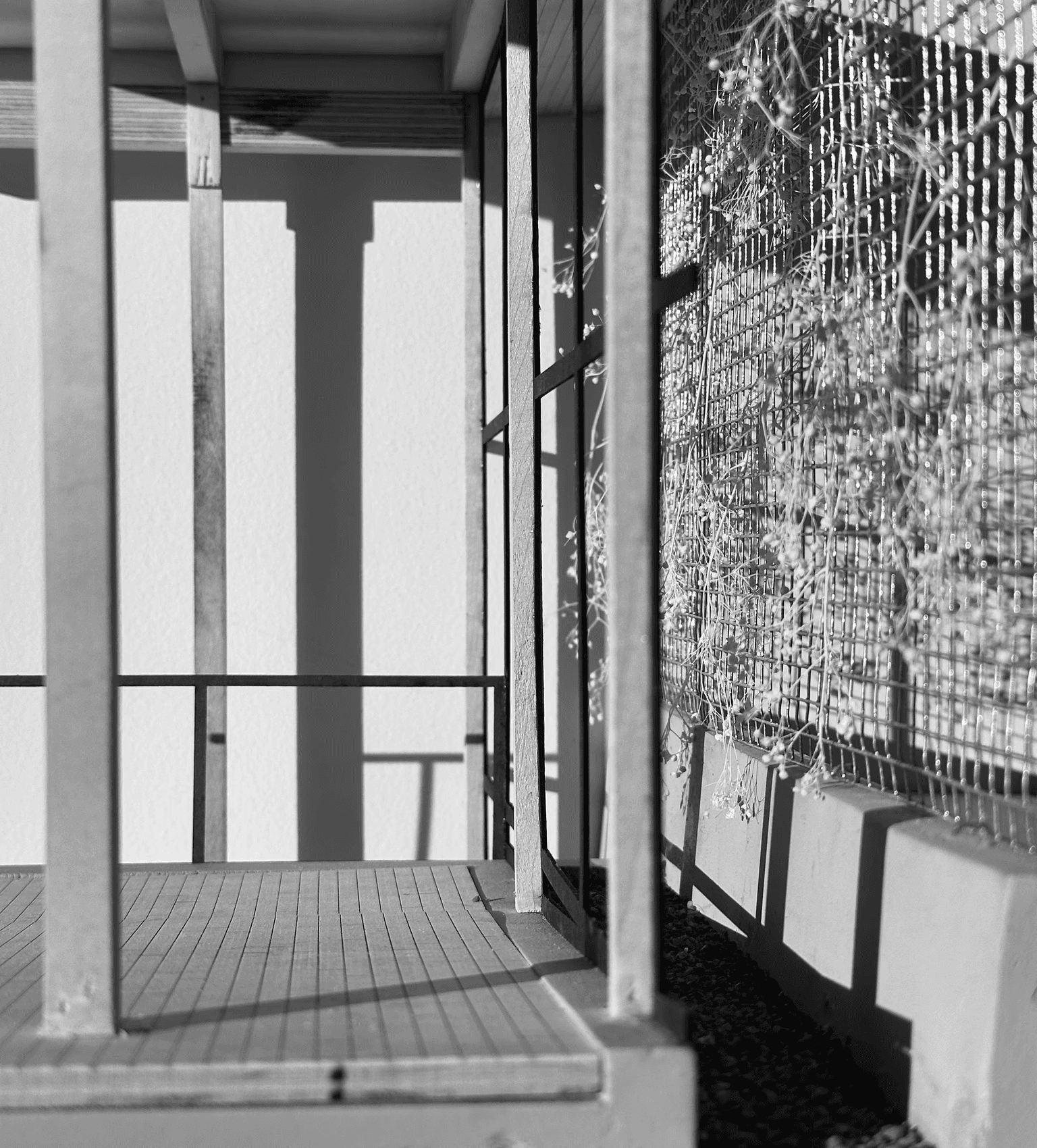
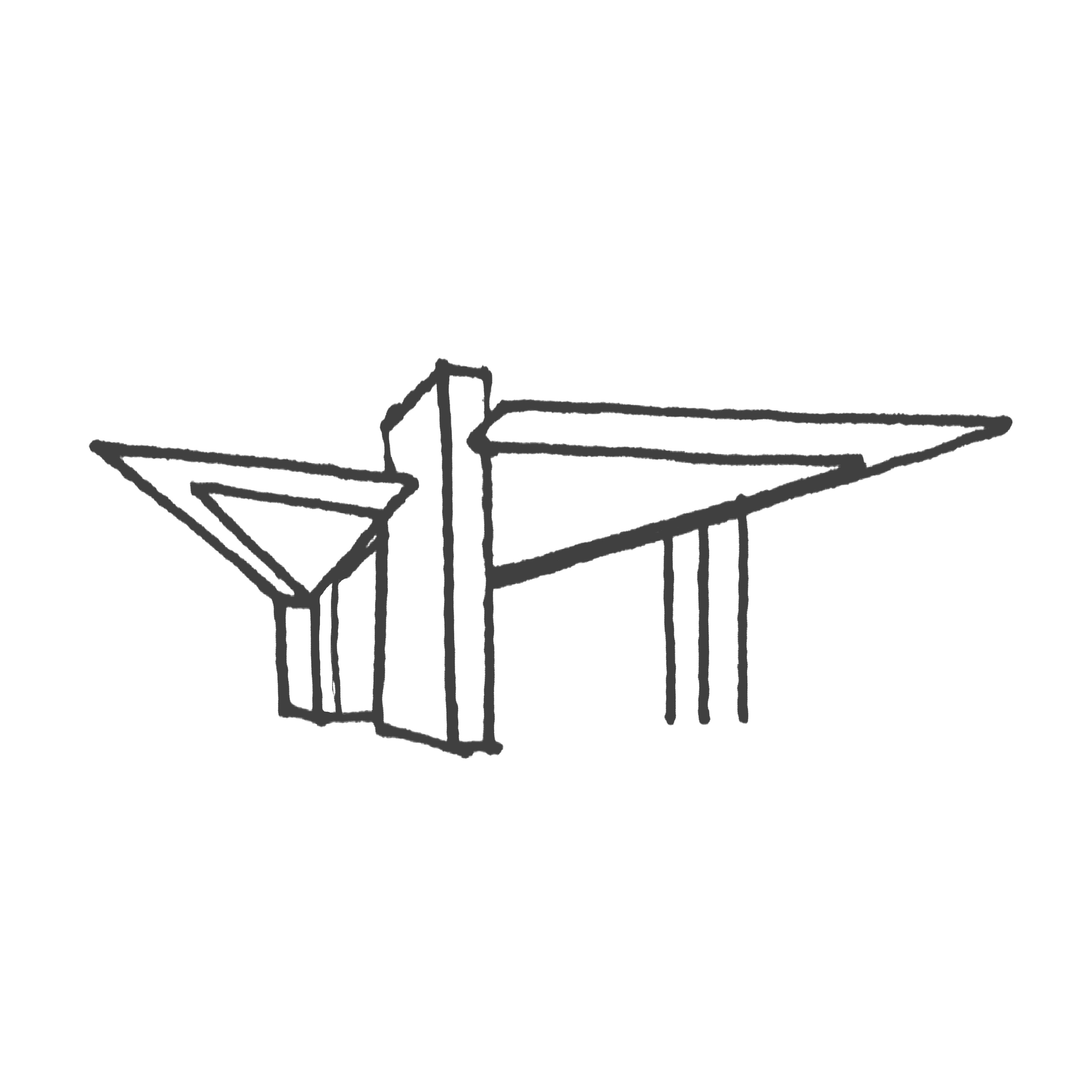
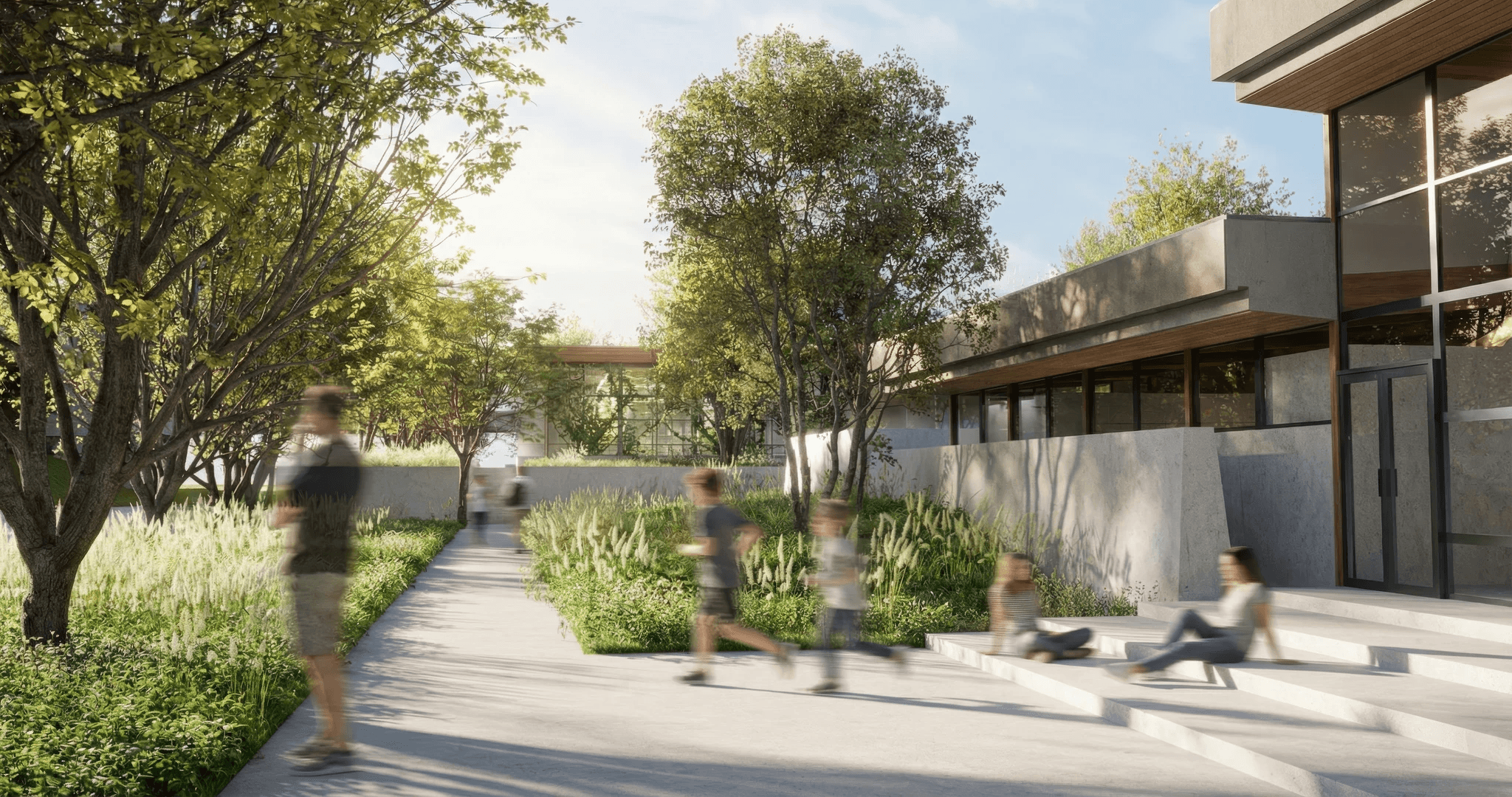
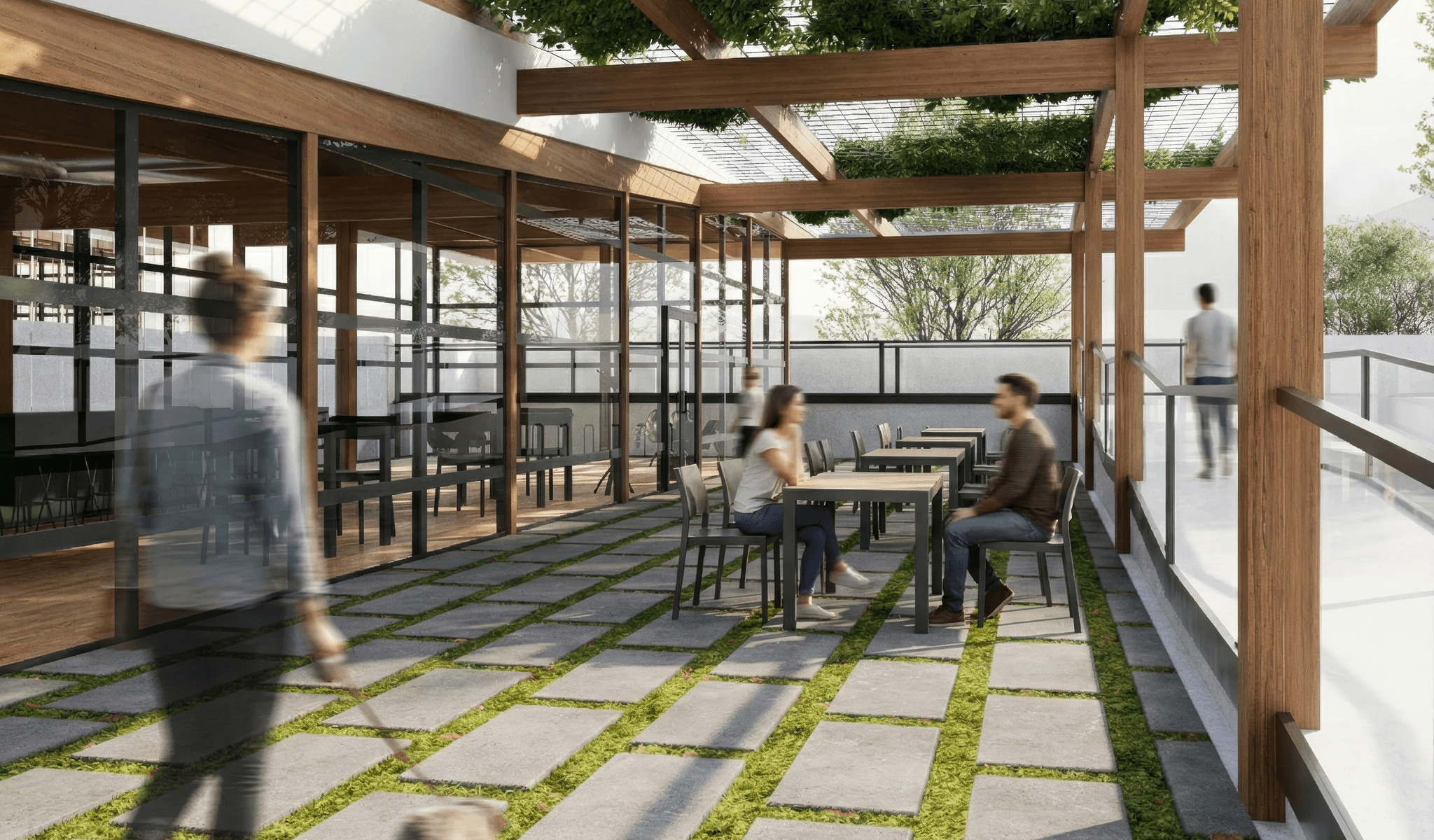
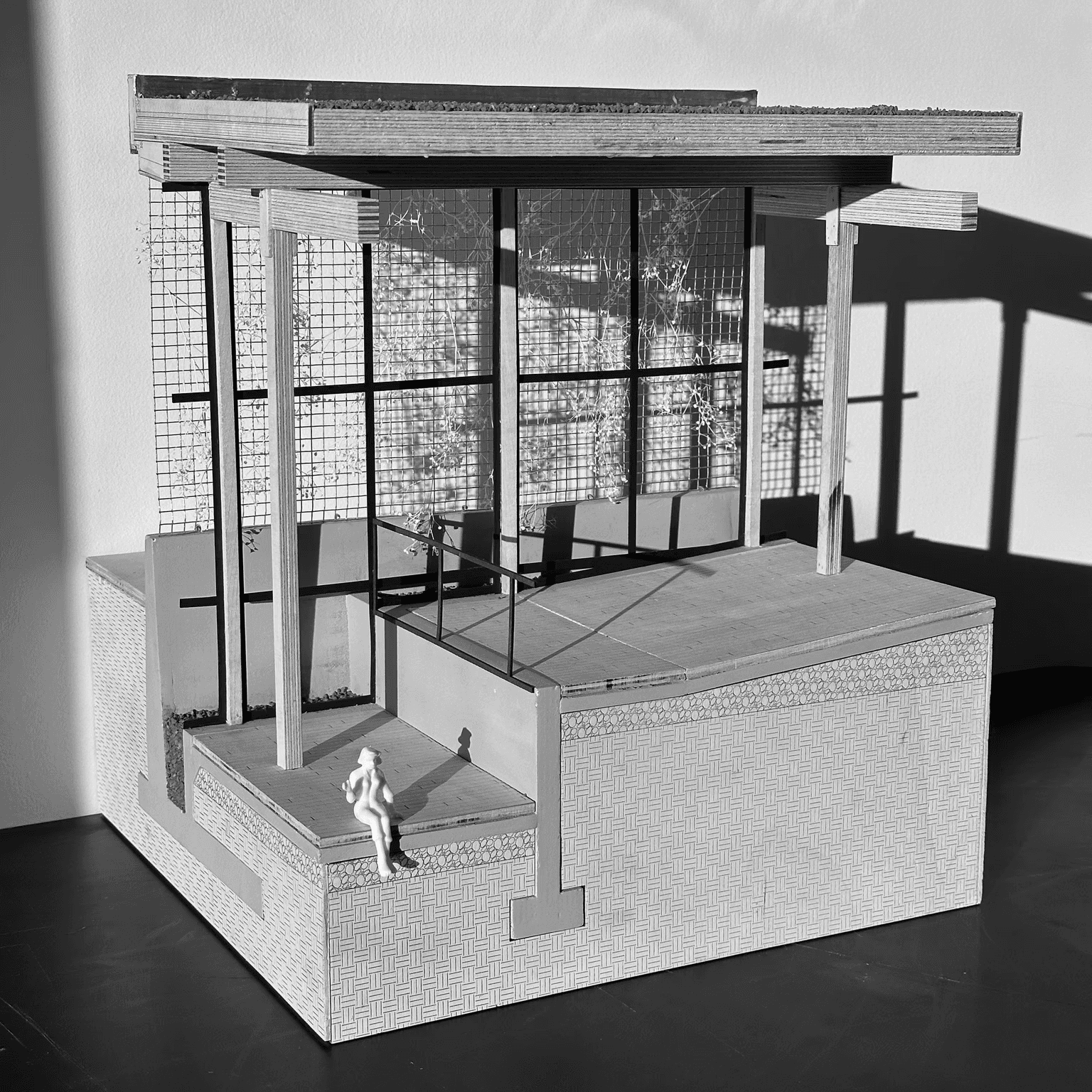
Material and formal decisions reinforce this balance between definition and adaptability. Mass timber, concrete, and steel establish a clear structural and architectural language, while a living screen wall moderates daylight and softens space.
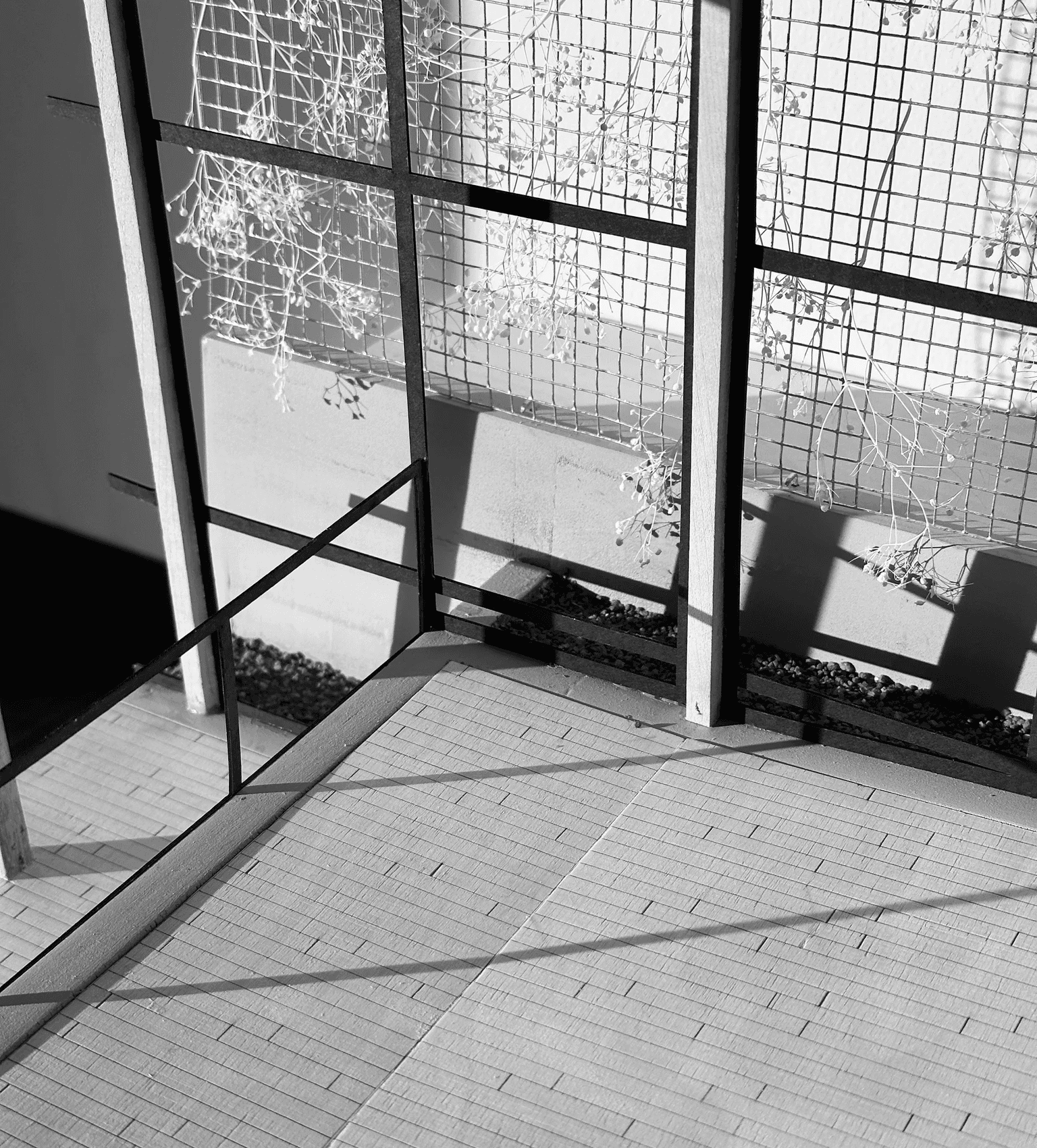
The buildings are designed to actively support sustainable performance through integrated water and landscape systems. Roof and site runoff is collected, slowed, and redistributed through a network of retention and drainage elements that support on-site irrigation and reinforce the site’s ecological cycle. Facades incorporate mesh wire green walls that function simultaneously as solar shading, environmental buffering, and living infrastructure. These planted surfaces soften the architectural edges, filter light, and maintain a continuous presence of greenery throughout the campus.
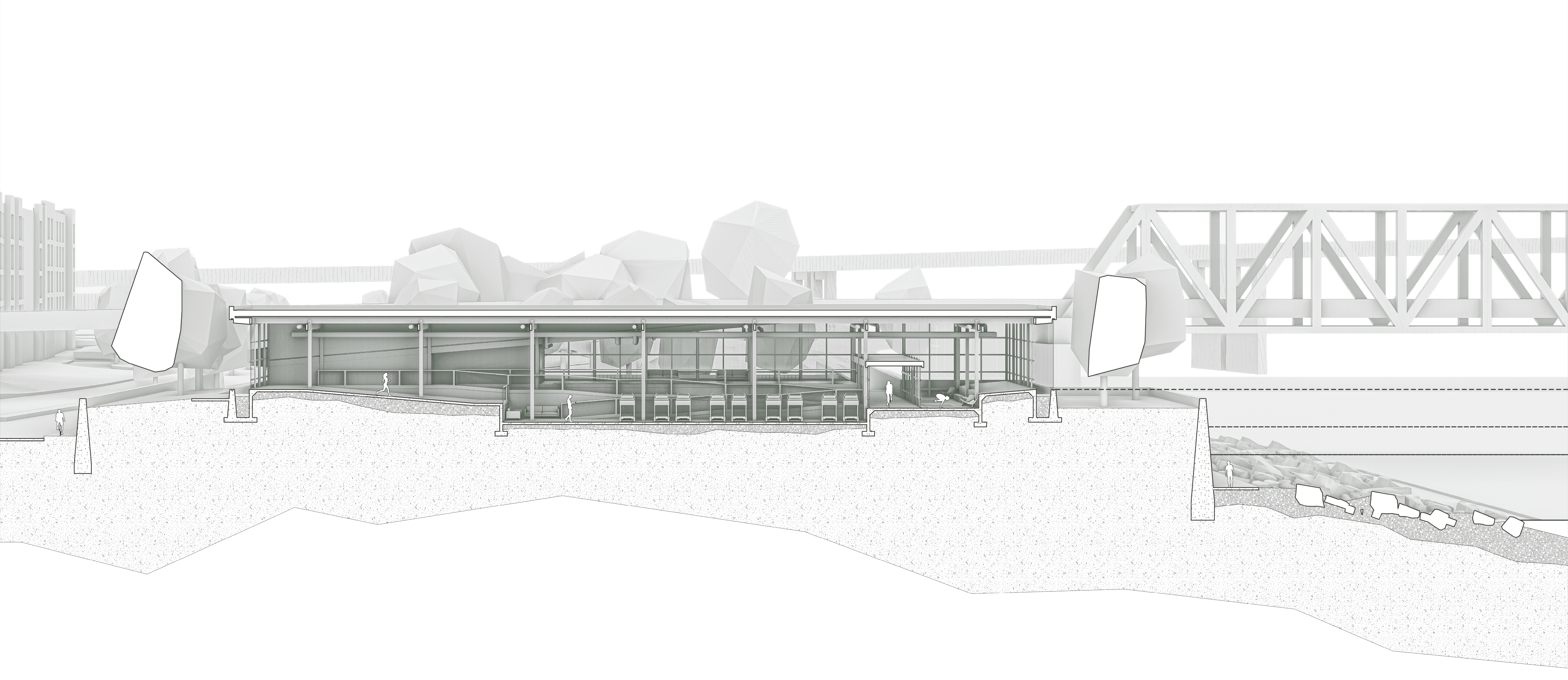
Each building is partially embedded into the landscape, using earth berms and flood walls to respond to floodplain conditions and stabilize the site. This sectional strategy defines the relationship between building and ground, while interior spaces remain open and flexible within that framework. Program is organized around central circulation cores aligned with the site’s primary path, allowing active and restorative spaces to remain distinct yet connected. The result is a campus that is both clearly structured and capable of evolving over time.
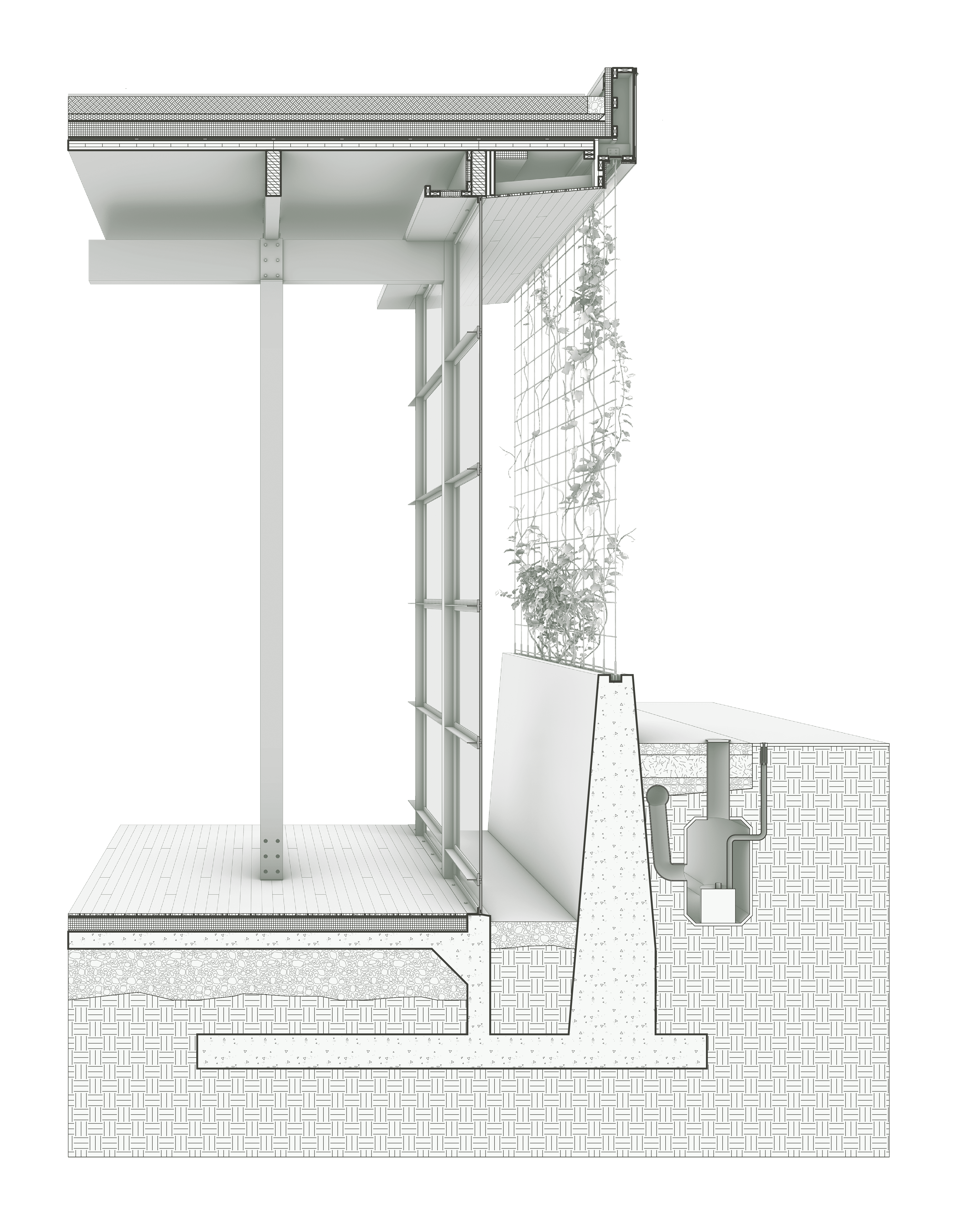
1
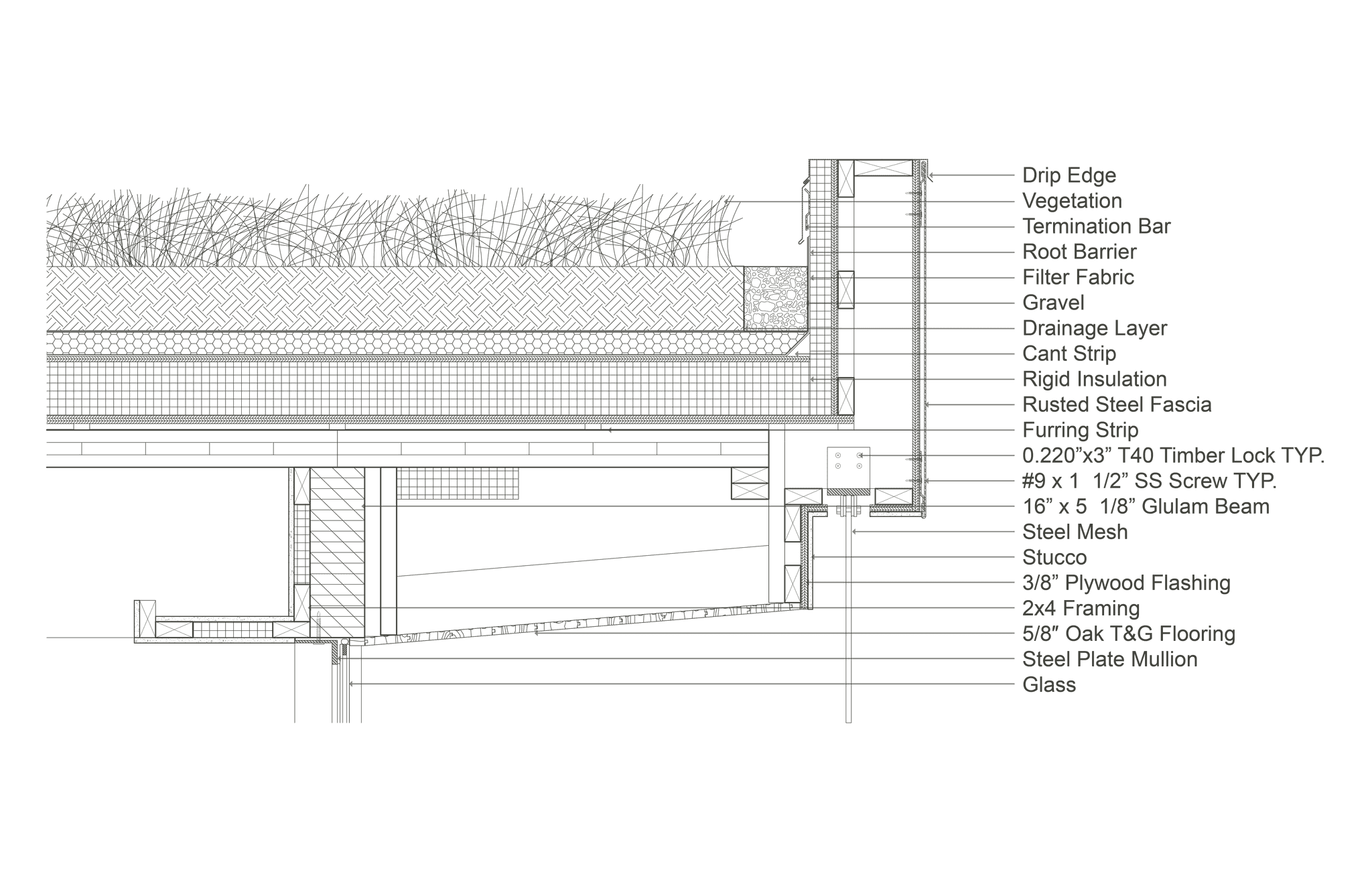
1 - ROOF DETAIL
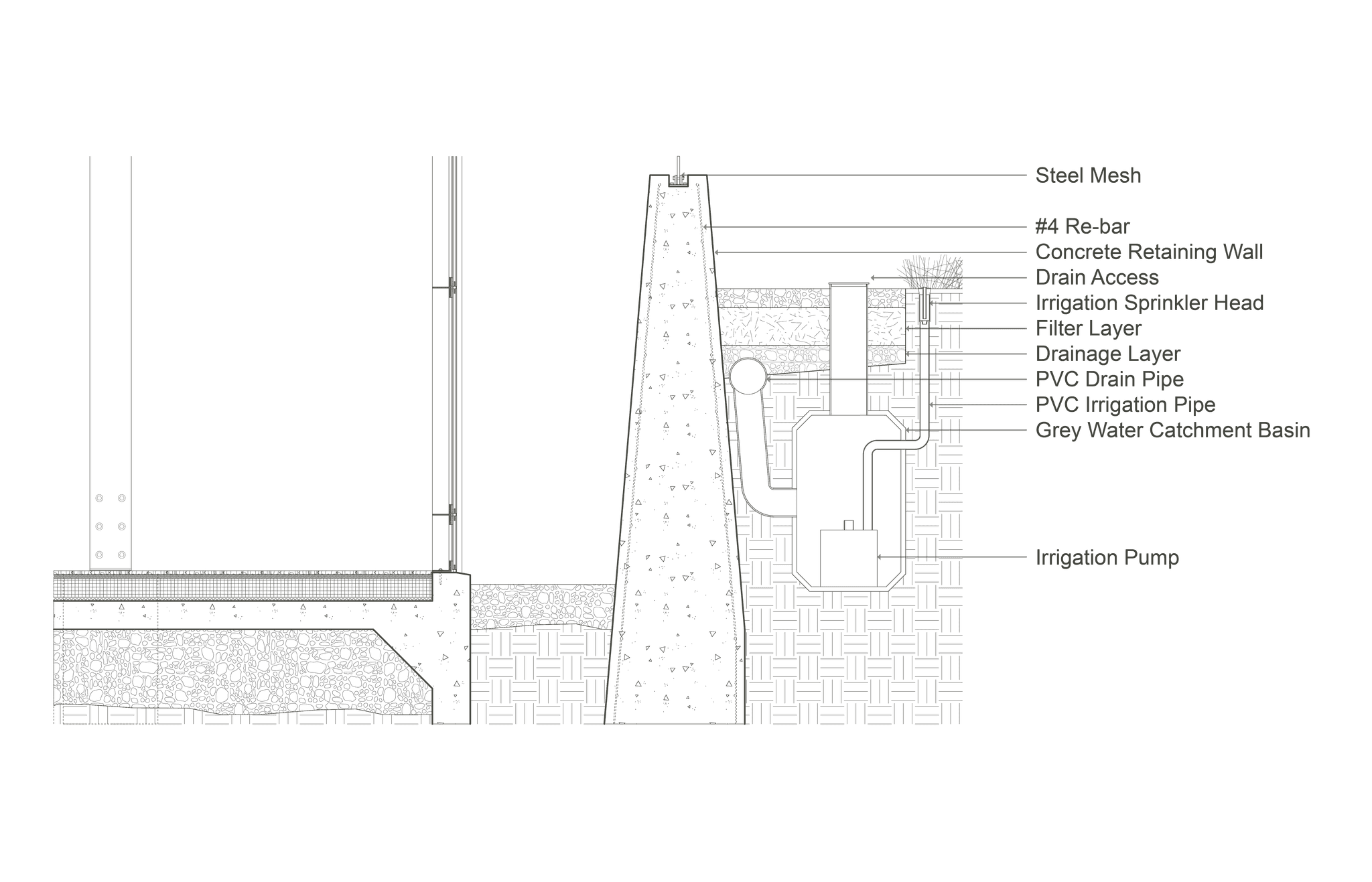
1 - GROUND DETAIL
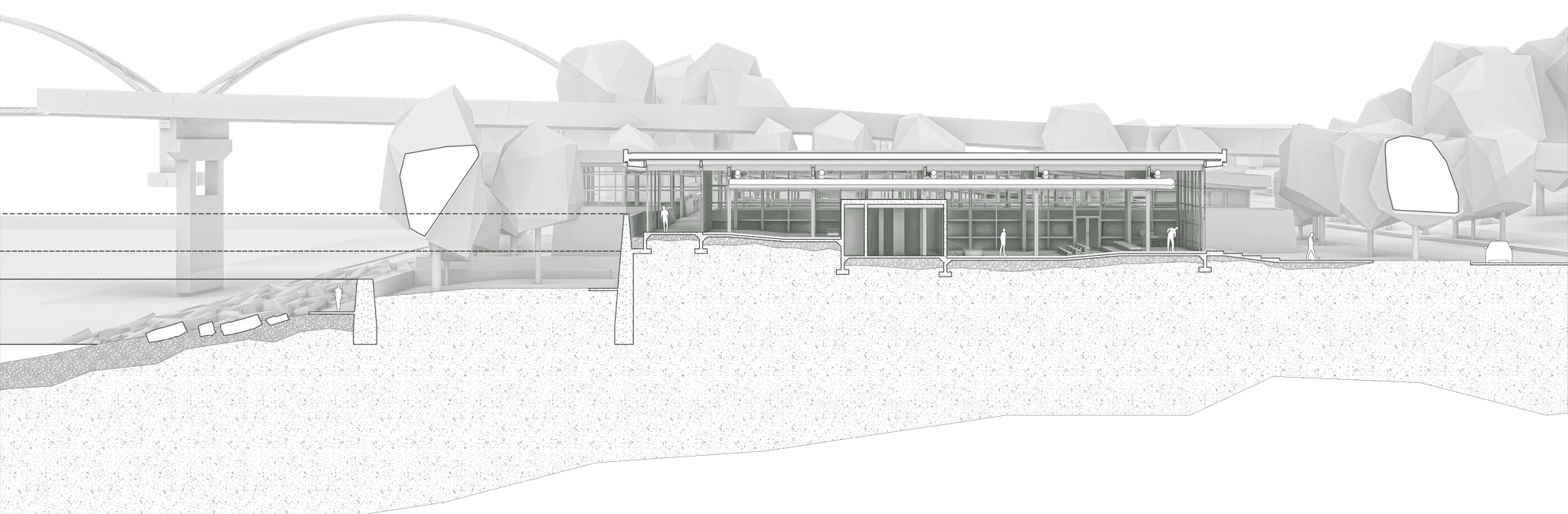
B
C