Intentional Disruptions
Name
Twisting by the Pool
Type
Public Installation
Location
Fayetteville, Arkansas
Year
Fall 2025
Credits
Group Work
The Urban Design Build Studio (UDBS)🔗 is a collaborative focused on implementation of appropriate, affordable, replicable design solutions for all. The work is done as part of a broader effort in Public Interest Design; working collaboratively between students and a network of professionals to bring these design solutions into the built environment.
Project Team: (BArch UDBS Students) John Blake, Eddie Franklin, Kierstin Hoover, Trey Melton, Stockton Pyle, Layla Riley, Kate Voss, Macy Watson, Sydney Winkler; (IARD Undergraduate UDBS Students) Aubyn Baskin, Finley Condon, Emerson Foley, Brandi Meredith, Annie Williams, Emma Zenthoefer; Mary Beth Mashburn UDBS Fellow; John Folan FAIA, UDBS Director and Professor.
Certain visualizations altered with AI
INITIAL
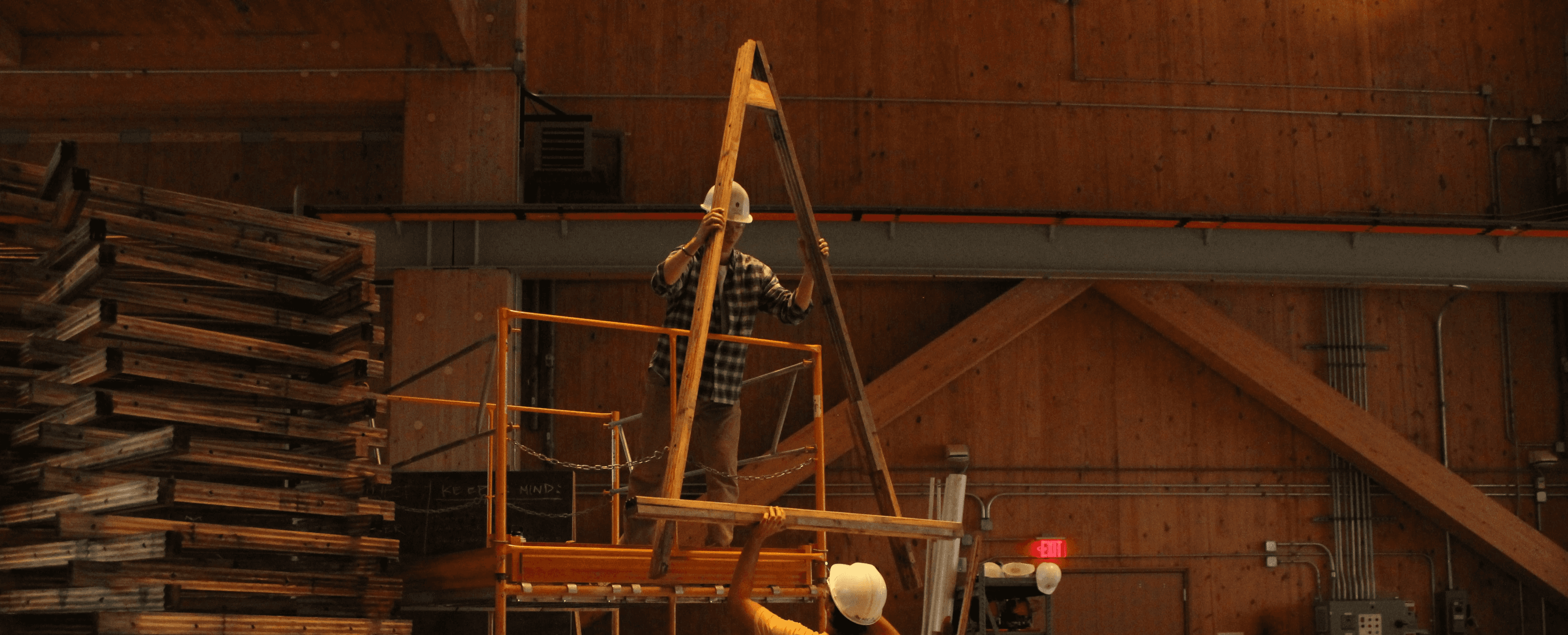
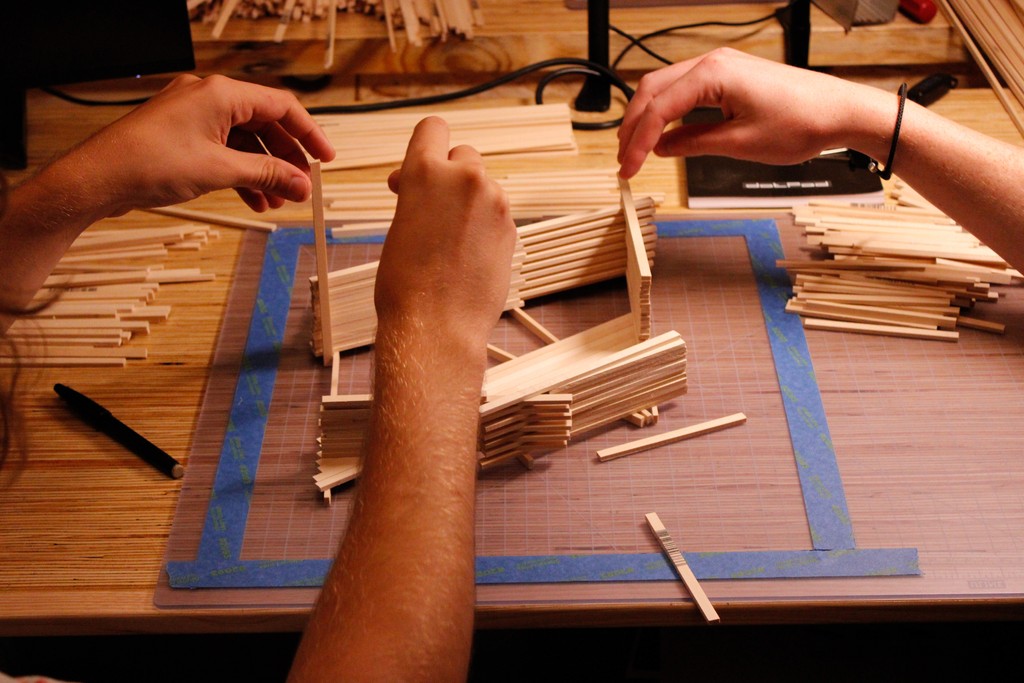
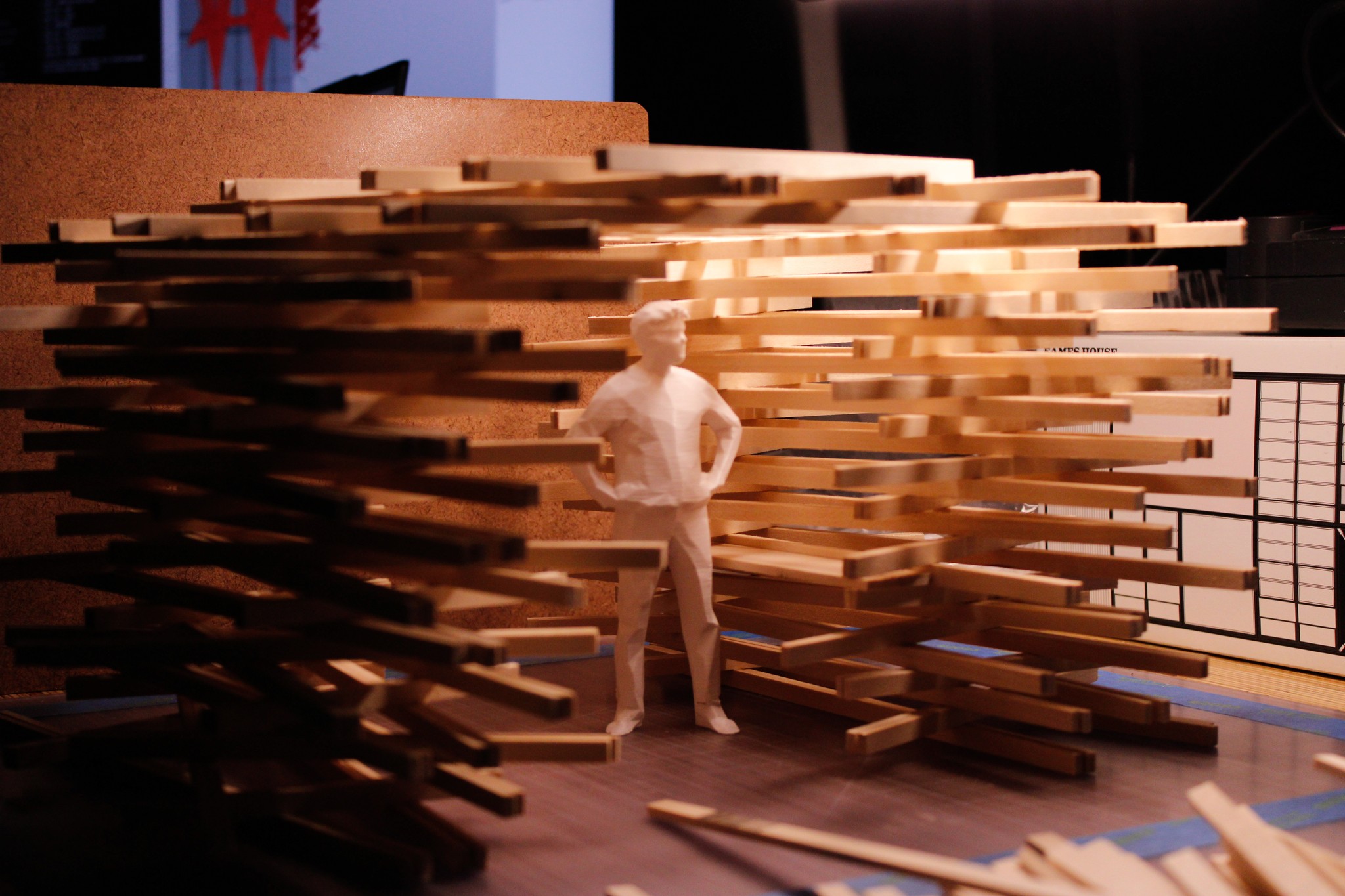
Intentional Disruptions, a project within the Fall 2025 Urban Design Build Studio (UDBS), began with the deconstruction of the UNTITLED Workforce Home Prototype; ongoing work developed by the nonprofit. Using Design for Deconstruction (DfD) principles as both a logistical framework and a design prompt, materials were carefully dismantled, cataloged, and reintroduced into the design process through scaled rapid physical modeling, drawing, and digital studies.
Working loosely at scale allowed structural logic, material limits, and spatial potential to surface early, with much of the initial design emerging through experimentation, play, and shared rule-making games rather than fixed outcomes.
My contributions drew on prior experience while pushing my growth as a designer. My construction and fabrication background enabled me to take on leadership roles, while my digital and parametric design skills directly informed design development and iteration.

DEVELOPMENT
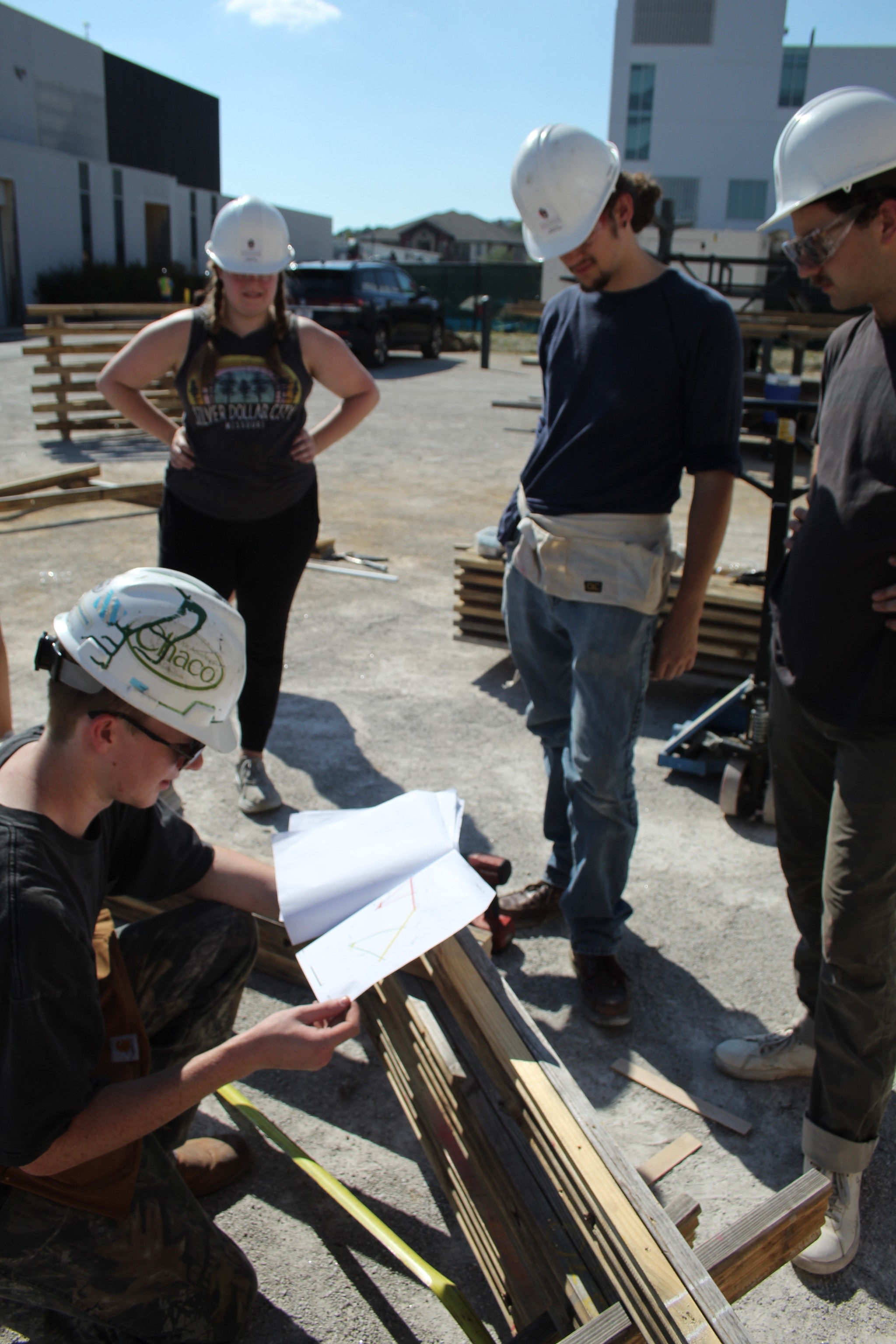
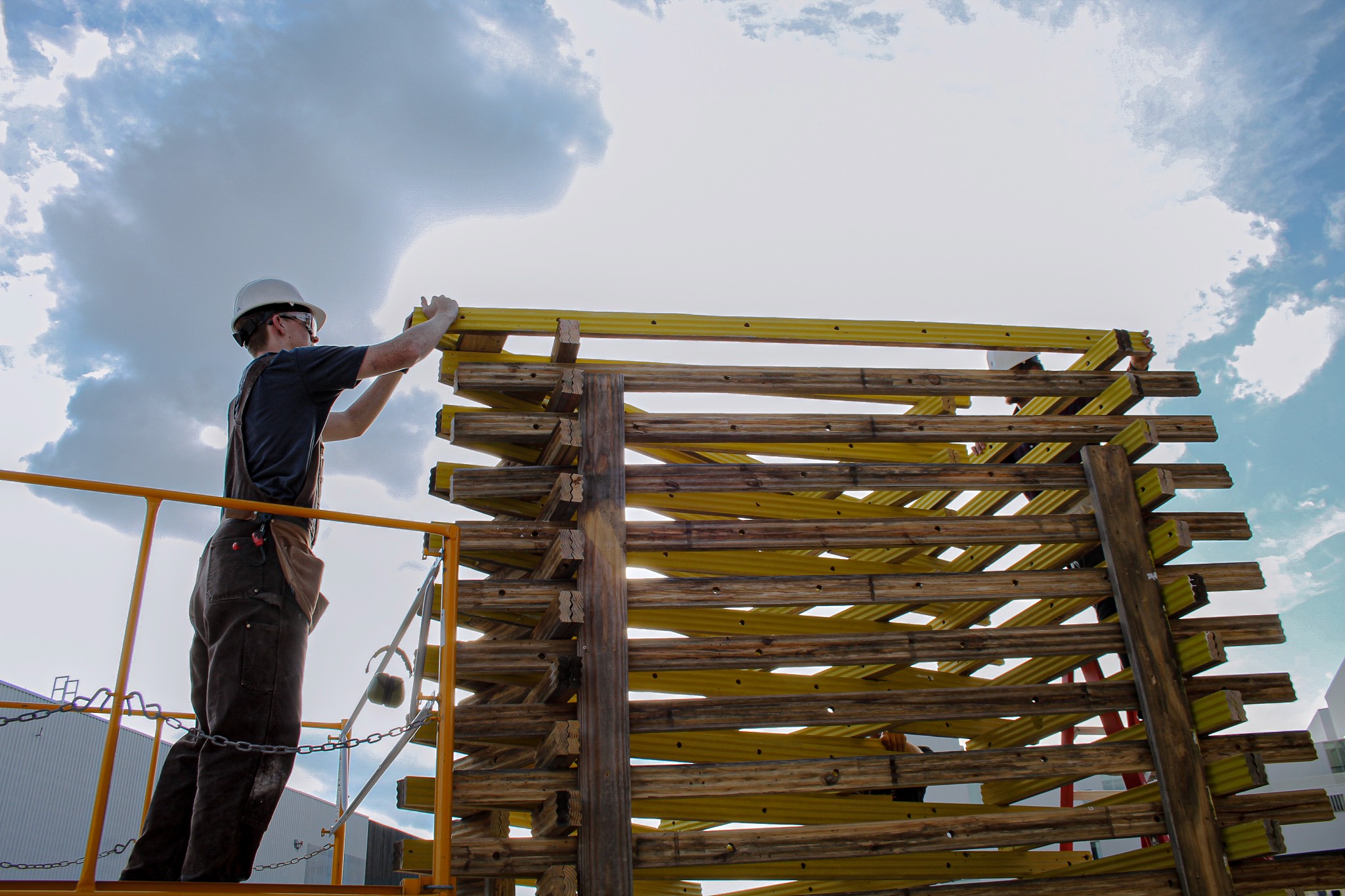
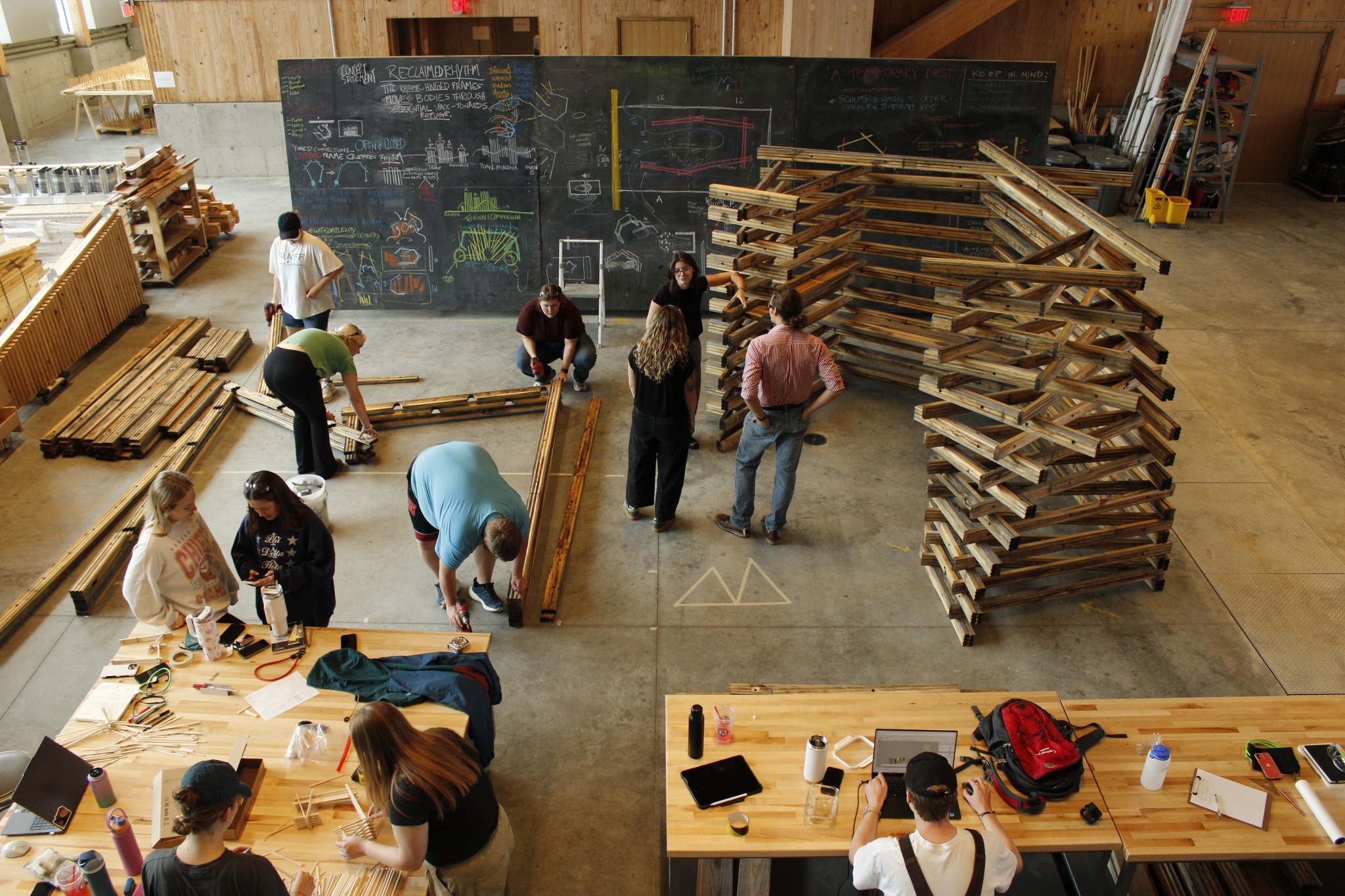
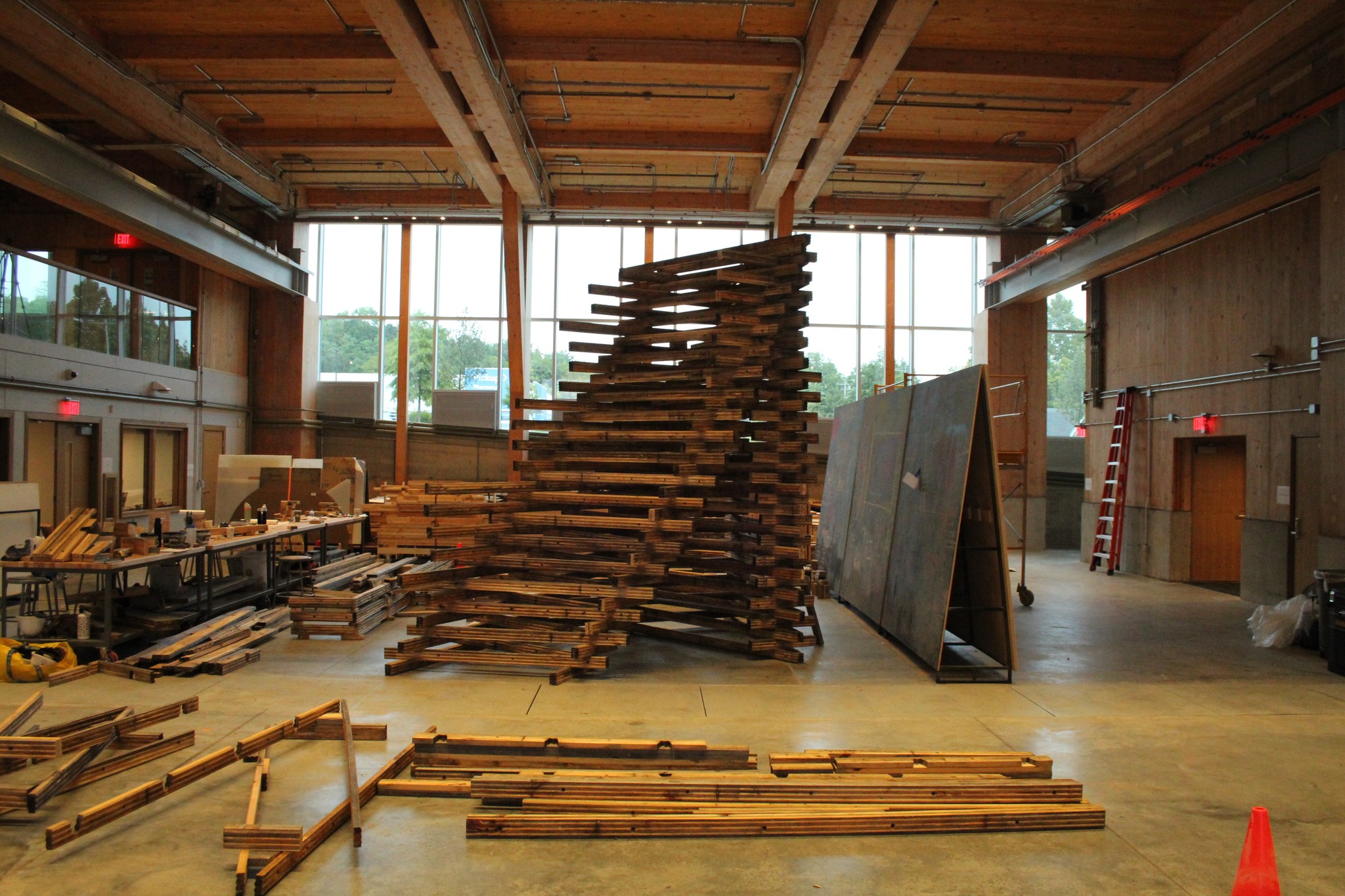
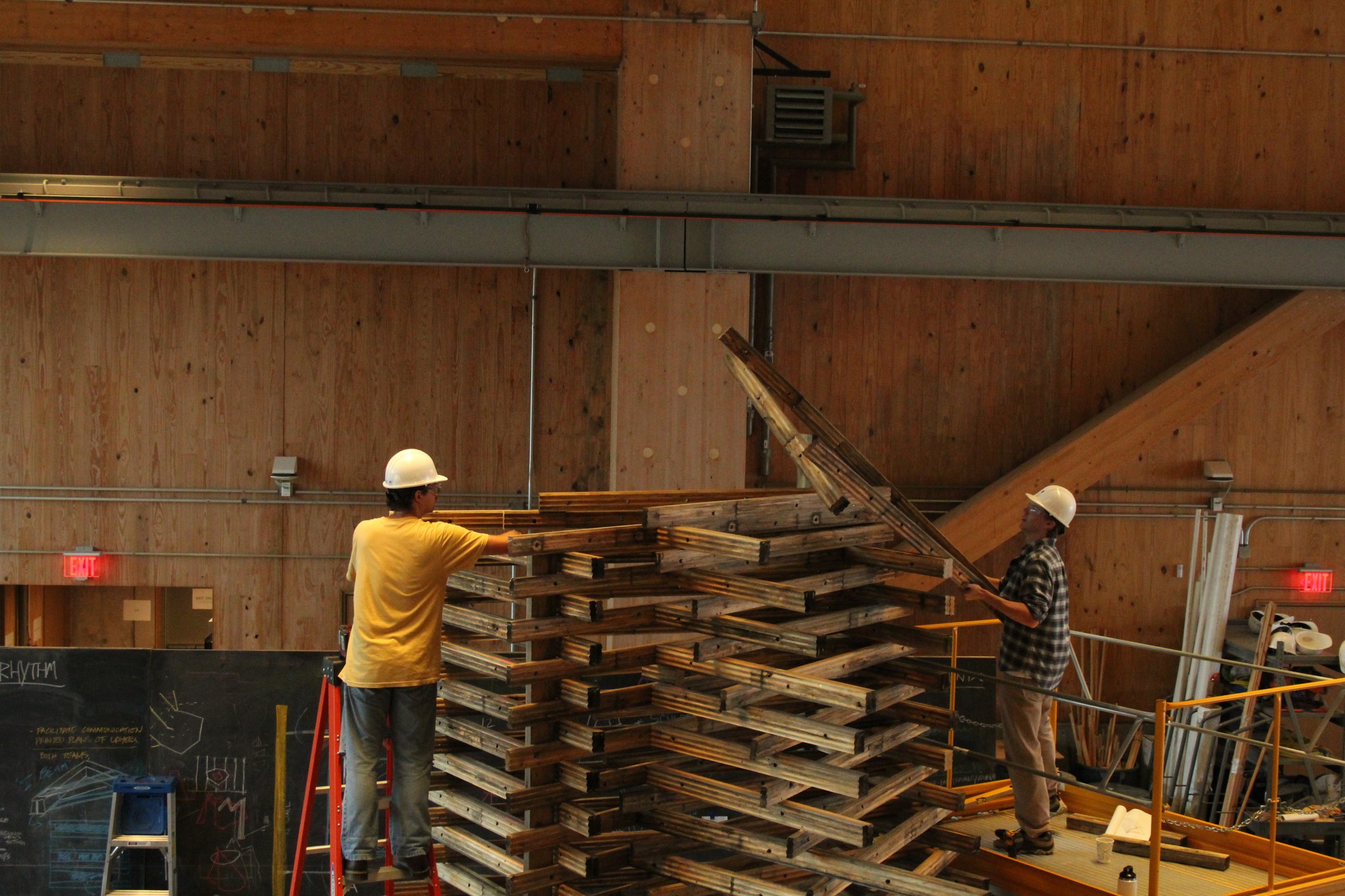
As concepts solidified, the project shifted toward full-scale testing and fabrication on the Anthony Timberlands Center fabrication floor, where design decisions were continuously challenged by material reality, labor, safety, and coordination.
Stemming from 2-3 person teams in the initial design phases, two groups of 7 and 8 were formed to develop two pavilions. Digital tools supported precision and alignment, but intuition and on-site judgment ultimately guided assembly within the unique design. Refinements and the process of translating ideas into buildable systems extended the originally set timeline, shaping both the work and the way the two teams operated together.
TWISTING BY THE POOL
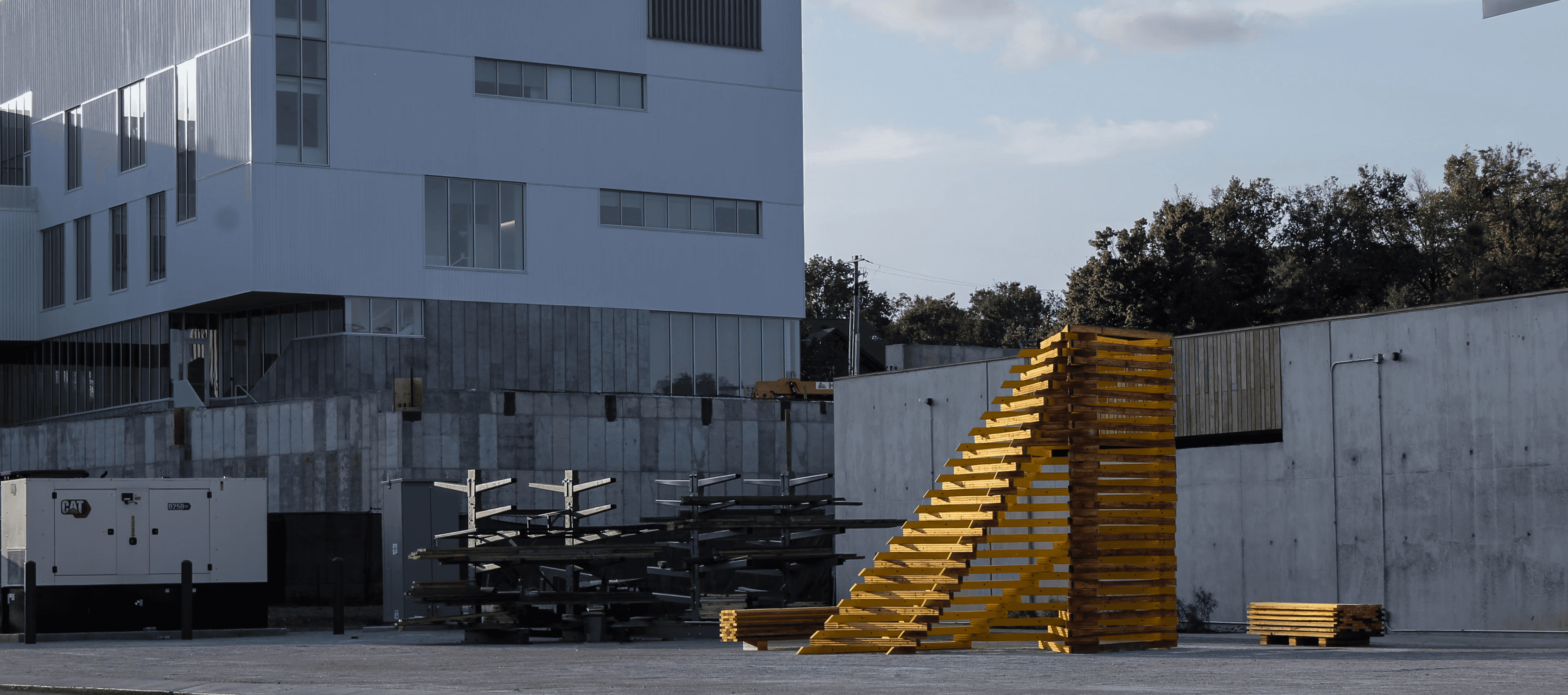
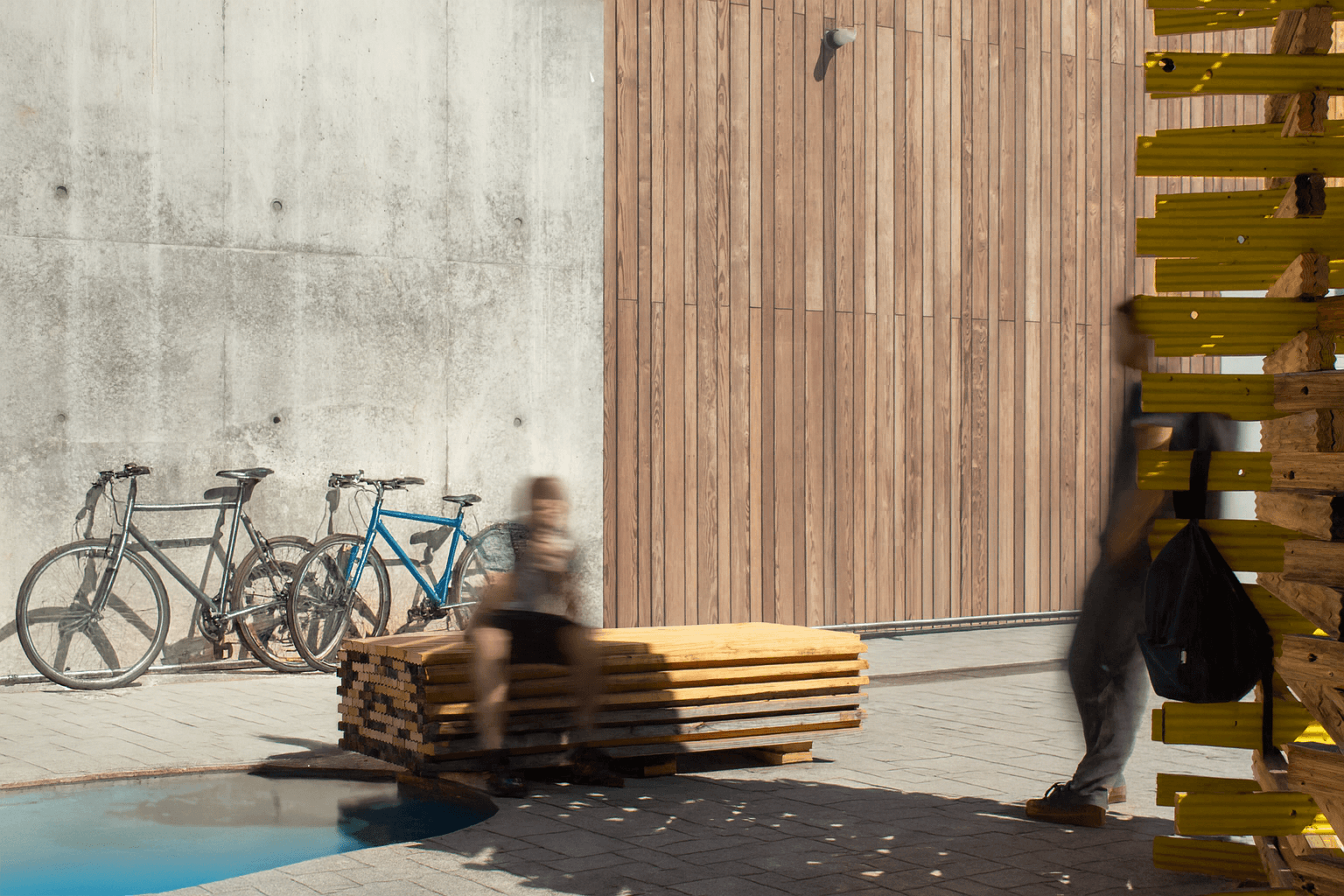
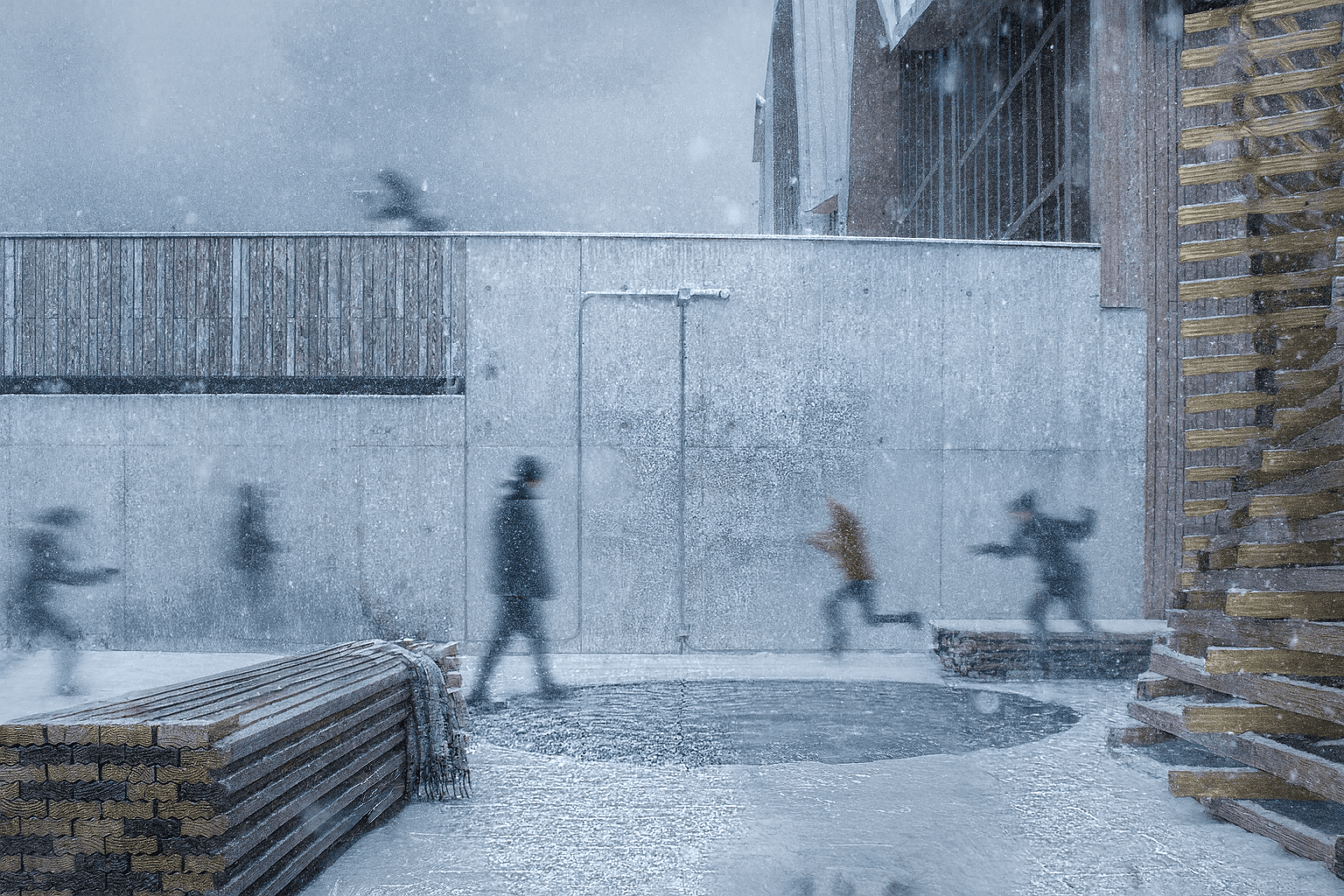
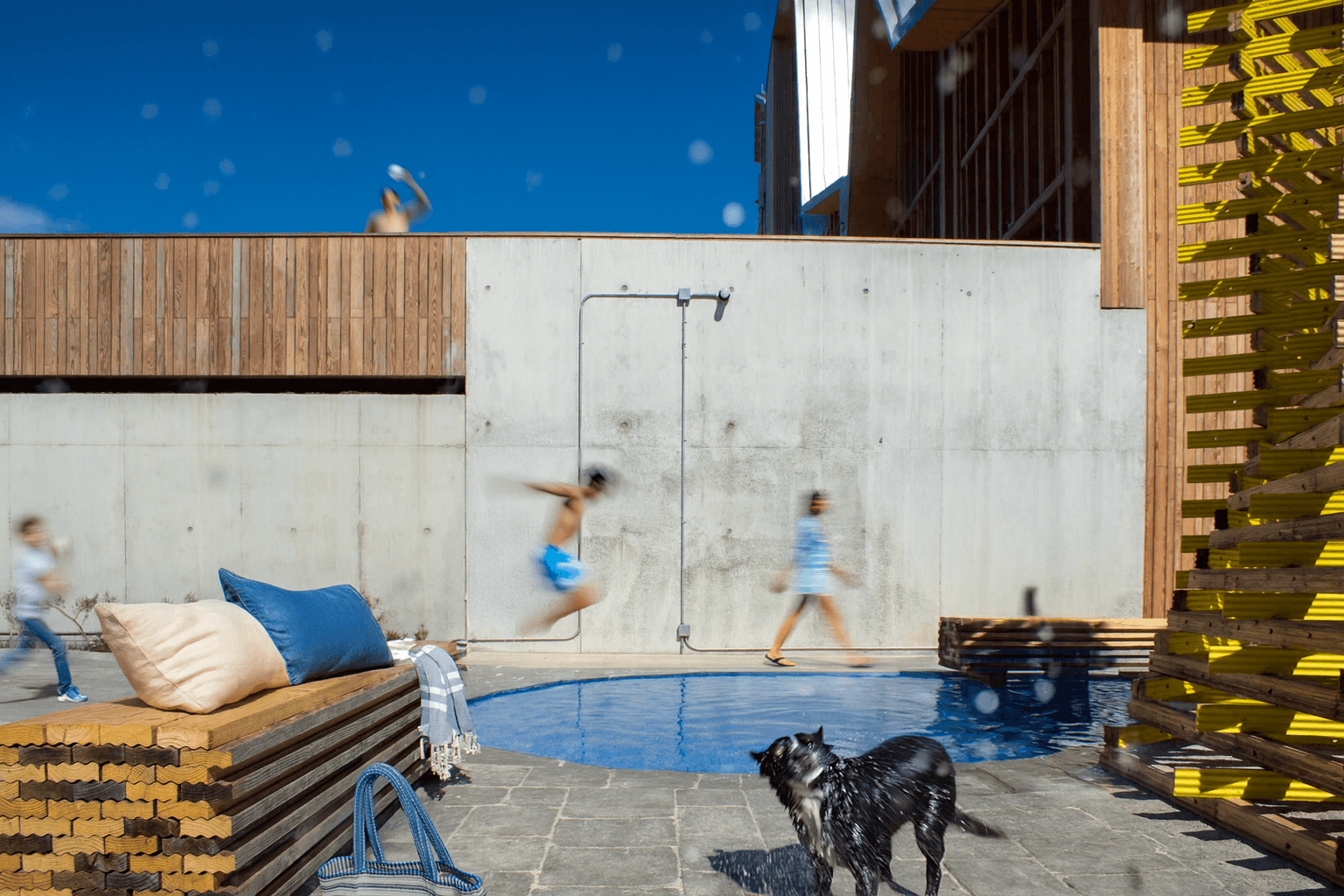
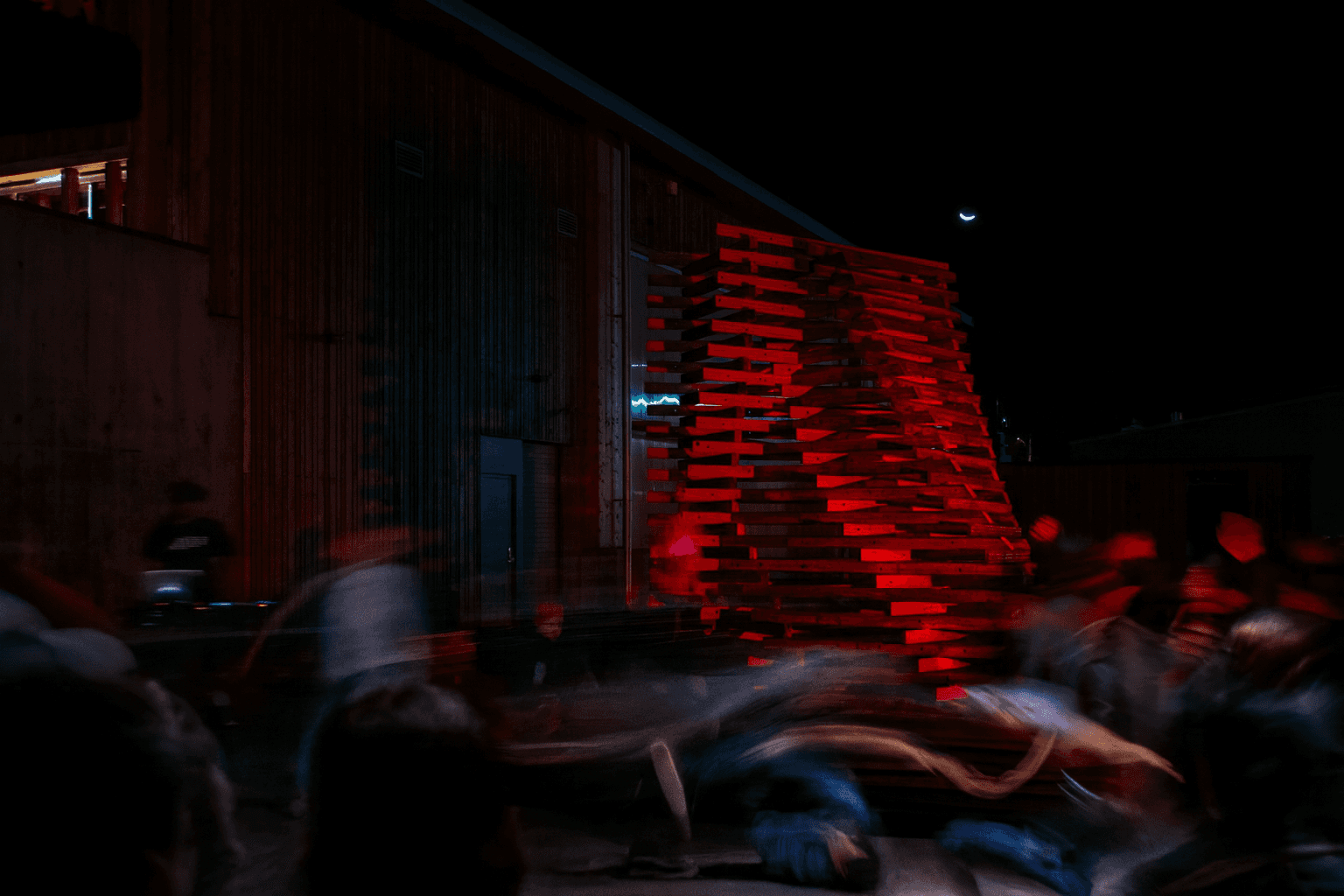
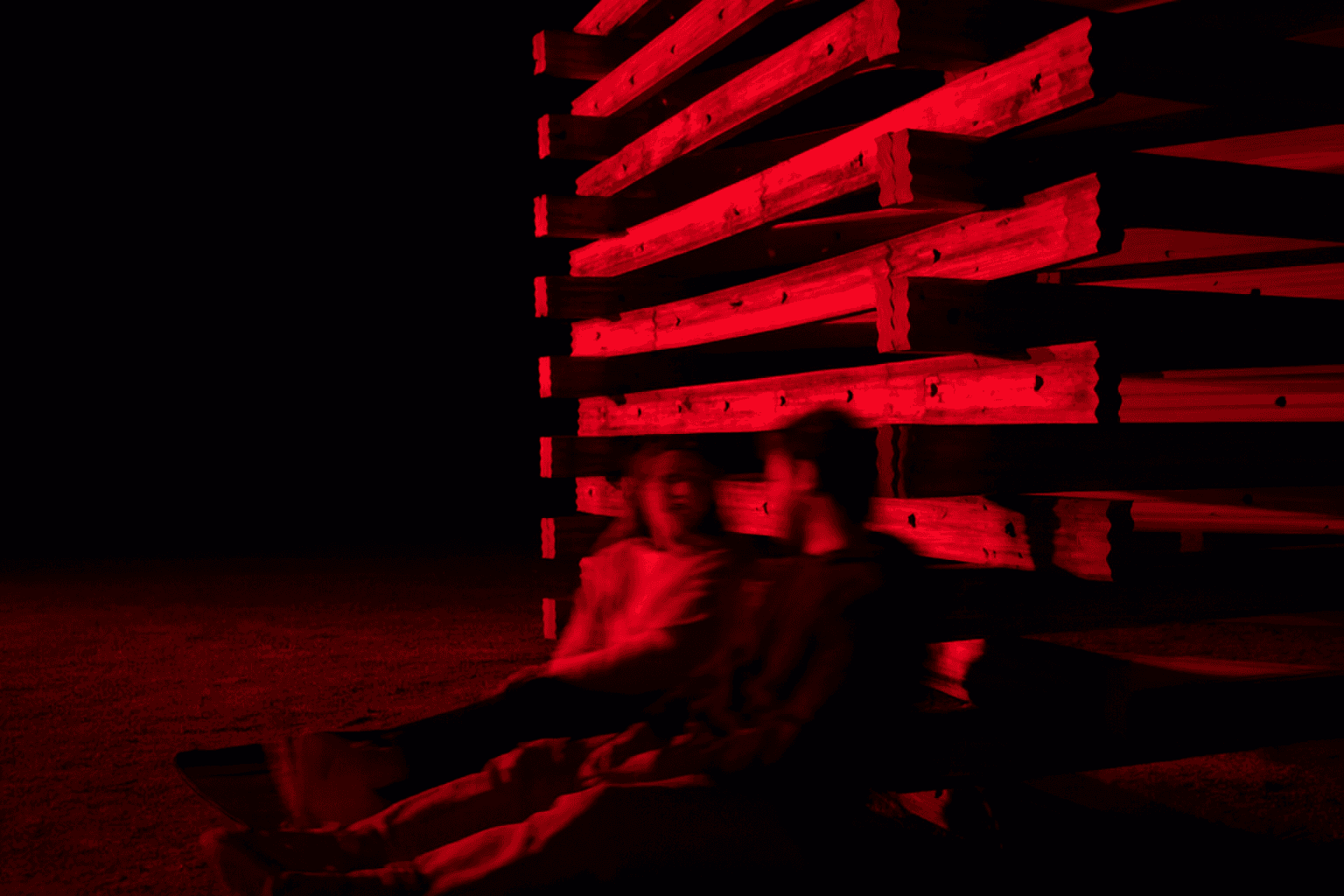
The final built pavilion space, a collective work by the total of 15 students, represents a synthesis of structural clarity, spatial experience, and adaptive reuse. Constructed entirely from reclaimed materials, Twisting by the Pool balances ordered systems with visual irregularity, creating a space that is both intentional and responsive.
Twisting by the Pool is a synthesis of the work applied to the narrative of interruption from routine as relaxation. The space is composed by the Cabana, Pool, as well as the Dock and Chaise; Consider these as the attractor, tie, and and anchors.
The completed work stands as a record of process as much as outcome, demonstrating how material intelligence, collective authorship, and full-scale making can inform architecture that is grounded, flexible, and experiential.